As an Amazon Associate, we earn from qualifying purchases. Some links on this site are affiliate links at no extra cost to you. Our recommendations are based on thorough research and editorial judgment.


Safe Balcony and Rooftop Use During Emergencies: Risks and Best Practices

Ever been on a balcony or rooftop during a storm? If so, you know it can feel pretty scary. But with a little preparation, these spaces can actually be safe during emergencies.
You may be interested


Let’s break down what you need to do to ensure you and your loved ones are protected when the unexpected happens.
First off, secure everything. Furniture can become a flying hazard if the winds pick up. Make sure to strap down or store away anything that might blow around.
Check the railings too. Are they sturdy? Do they meet the height standards? The last thing you want is for a railing to give way.
Next, take a good look at the flooring. Cracks and water damage are red flags. Seal any gaps to keep the elements at bay and prevent more expensive repairs down the line.
If you have kids, installing childproof locks is a smart move. You want to keep them safe while enjoying the view.
Electrical safety is also key. Confirm that all outlets are fitted with Ground Fault Circuit Interrupters (GFCIs). This is especially important if your balcony or rooftop gets exposed to rain or moisture.
Here’s another tip: after severe weather, steer clear of any damaged areas. If something seems off, report it ASAP.
And don’t forget about routine upkeep. Regular checks make a world of difference. Weatherproofing and consistent maintenance can keep any risks at bay.
Taking these steps isn’t just about staying safe; it’s about creating peace of mind during emergencies. Trust me, preparing now can help you enjoy your outdoor spaces with confidence when stormy weather rolls in.
Stay safe out there!
Key Takeaways
- Secure guardrails to standard heights (36-42 inches) and check for stability to prevent falls during emergencies.
- Remove or fasten furniture to prevent them from becoming hazardous projectiles in strong winds or evacuation scenarios.
- Regularly inspect flooring and railings for cracks, rust, or structural damage to ensure safety under emergency loads.
- Install childproof locks and use weatherproof electrical fixtures with GFCIs to reduce accident and fire risks.
- After severe weather, avoid damaged areas, report hazards immediately, and document damage for timely repairs and safety assurance.
Watch Out for Common Balcony and Rooftop Hazards in Emergencies

Emergencies can strike when we least expect them. I’ve learned the hard way that overlooking common hazards on balconies and rooftops can lead to serious accidents. Knowing what to look for can save lives.
First, let’s talk about edges. If guardrails aren’t secure, they can be a recipe for disaster. Always make sure these are up to standard. You don’t want anyone getting too close to an unprotected edge.
Next up, furniture. You might have some chairs or tables that look harmless, but during high winds or a quick evacuation, they can become dangerous projectiles. Take a few moments to secure or move these items out of the way before anything goes down.
And don’t forget about rooftops. They often lack safety features that we take for granted on the ground. Having a clear pathway can make all the difference. Ensure surfaces are stable and not slippery—this prevents nasty slips and falls.
Regular inspections are something many overlook, but they are crucial. Check for:
- Cracks in the flooring
- Wear and tear on railings
- Any signs of weakness in structures
Being aware of these risks can make a world of difference. By taking precautions, we can make balconies and rooftops safer spots during emergencies.
Also, understanding the importance of proper materials and weather resistance in outdoor structures can help reduce damage during extreme weather events.
Stay alert, stay safe—those small actions can save you or someone else from a serious fall.
How to Inspect Balcony Railings and Flooring for Safety
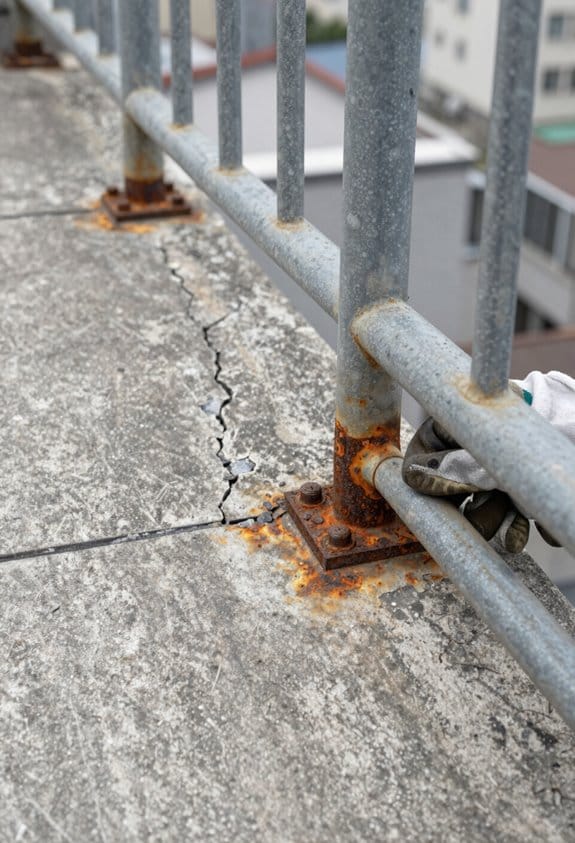
Balconies and rooftops can be full of surprises, but not all of them are pleasant. Recently, I took a closer look at my balcony’s railings and flooring, and I discovered some potential hazards that could have led to serious accidents. It’s scary how quickly things can go wrong if you don’t stay on top of maintenance.
First off, let’s talk about those railings. It’s crucial to inspect them regularly. Check for:
- Cracks or rust
- Looseness
- Compliance with height standards (should be 36 to 42 inches)
I like to think of balcony railings as a safety net; if they’re not sturdy, they won’t do their job.
Then there’s the flooring. Sometimes, what looks like a solid surface might be hiding damage. Look for:
- Signs of sagging
- Splitting
- Any noticeable damage
Using a moisture meter is a smart move; it helps you spot water infiltration that can lead to unseen rotting. You might be surprised to find out how much hidden damage can accumulate over time.
To keep everything safe, routine maintenance is essential. Take some time to:
- Tighten any loose screws or fittings
- Repair any flaws you find
And don’t skip documenting everything. Jot down your inspection results and repairs. This record not only helps prevent accidents but also shows you’re taking proactive steps for safety.
In emergency situations, having thermal rescue blankets stored safely nearby can also enhance your safety on balconies and rooftops.
Stay on top of this, and you can enjoy your balcony worry-free. With a little effort, it can remain a safe and enjoyable space for years to come!
Secure Furniture and Childproof Your Balcony and Rooftop
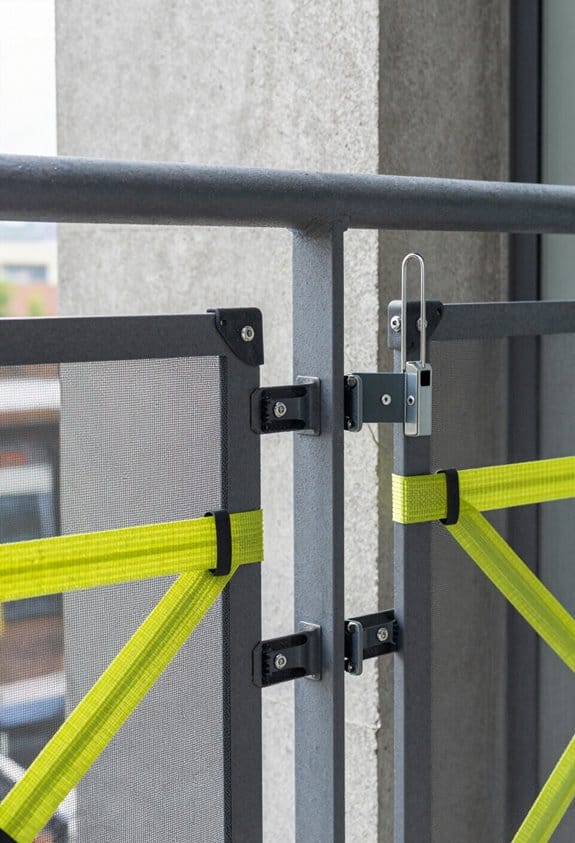
Securing your balcony furniture may seem trivial, but it’s essential for keeping everyone safe, especially during strong winds or unexpected emergencies. I’ve learned the hard way that outdoor furniture can easily tip over if it’s not stable. So, here’s what you can do:
- Use heavy-duty ties to secure your furniture.
- Bring items indoors when the weather gets rough.
- Invest in outdoor pieces designed for windy conditions.
Now let’s talk about childproofing your balcony and rooftop. It’s crucial if you have young kids running around. You might wonder what steps to take. Start by installing childproof locks on balcony doors. This simple measure can significantly reduce the risk of accidental falls.
Furthermore, make your railings as safe as possible. Add extra screws and supports to prevent any potential collapses. Here’s another smart idea: use anti-climbing devices on the lower railings. This will discourage little ones from trying to climb up to dangerous spots.
Also, keeping a 72-hour preparedness bag ready can provide peace of mind during emergencies and ensures essential items are at hand if you need to evacuate suddenly.
Follow Balcony and Rooftop Fire Safety Rules and Escape Plans
Fire emergencies can happen in an instant, and it’s up to us to stay prepared. Balconies and rooftops often serve as escapes, but we need to make sure they’re safe to use. So, how do we do this?
First off, we can’t forget about safety regulations. You want to ensure you have non-combustible materials and that you’re following local codes. These rules aren’t just suggestions; they’re essential for our safety.
Next, keeping those escape routes clear is crucial. Think about it: if doors, windows, and pathways are blocked, getting out becomes a nightmare. Make it a routine—check your escape routes regularly.
And let’s talk drills. Conducting fire drills involving balconies and rooftops is a must. These practices help everyone remember the quickest routes to safety, reducing panic and confusion during a crisis.
Now, what about those flammable items? It’s simple: don’t have them around. Instruct everyone to keep access areas clear. Also, consider planting fire-resistant plants—these little guys can actually help minimize risks.
In addition, having an organized emergency kit with essential supplies can provide critical support during any emergency on balconies or rooftops, ensuring you are prepared for injuries or unforeseen situations through first aid supplies.
Implement Electrical Safety on Balconies and Rooftops
Balconies and rooftops can be fantastic spots for relaxation, but do you ever think about the potential hazards lurking around? Electrical safety is crucial in these spaces, and neglecting it can lead to serious accidents or even fires. Here’s what to keep in mind to stay safe while enjoying your outdoor areas.
First off, always opt for weatherproof electrical fixtures. These are designed to withstand the elements, which is vital for outdoor usage. Also, don’t forget about Ground Fault Circuit Interrupters, or GFCIs, for your outdoor outlets. These handy devices help minimize the risk of electric shock, especially when things get wet.
Next, regularly give your wiring and all electrical components a good once-over. Look for signs of wear or damage. Cracked insulation or exposed wires can be a recipe for disaster, possibly leading to malfunctions or fires.
Also, keep an eye on how much you plug into those outlets. Overloading them is a no-go. Stick to the recommended wattage limits and always follow local safety standards.
Let’s talk about the importance of hiring a licensed electrician for any installations or maintenance. DIY projects can be tempting, but a pro ensures everything is up to code and safe to use.
In short, keeping your balconies and rooftops safe is about being proactive. Prioritize safety and regularly check on your electrical systems. You’ll enjoy your outdoor spaces with peace of mind knowing you’re taking the right precautions. Stay safe and happy lounging!
Additionally, when working on electrical installations in such areas, wearing appropriate safety footwear can help protect against electrical hazards and slips.
Apply Weatherproofing to Protect Balconies and Roofs in Emergencies
When bad weather hits, the last thing you want is to worry about your balcony or roof. I’ve seen firsthand how vital it is to keep these areas safe and sound. Taking a few simple steps can make all the difference.
Start with sealing cracks and gaps. Use durable caulk; it’s like a trusty ally against water sneaking in. Next, think about weather-resistant coatings. They’re essential for giving your surfaces the ability to handle heavy rain and strong winds.
Don’t forget to keep an eye out. Regularly check for damage—look for cracks, rust, and worn-out seals. Catching these issues early can save you from bigger headaches down the line.
Now, let’s talk about outdoor furniture. It’s smart to pick pieces designed for tough weather. This choice minimizes risks, especially when storms roll in.
Staying proactive with weatherproofing means you’re not just protecting your property but ensuring everyone’s safety too. Making these adjustments now can shield you from larger issues later. Stay safe out there!
Additionally, using IPX4 waterproof ratings for outdoor materials ensures durability against adverse weather conditions.
What to Do If You Spot Balcony or Rooftop Damage During an Emergency
Spotting damage on a balcony or rooftop during an emergency can be a real shocker. I’ve been there, and it’s important not to panic. Your first move should always be to report the damage to building management or call emergency services. This helps keep everyone safe.
Staying away from the damaged area is critical. You don’t want to risk a nasty fall or, worse, a collapse. Here’s what you should do:
- Keep escape routes clear.
- Tell others about any hazards you’ve noticed.
- If it’s safe, snap some photos or jot down notes about the damage for later.
Local building codes often provide specific steps to follow during emergencies. Although it might be intimidating, knowing what to do can make a big difference.
Acting quickly and responsibly can prevent greater harm and assist professionals when they’re able to step in. Trust me, being proactive keeps us all safer. Remember, your vigilance helps protect not just you but those around you as well. Also, having access to emergency water storage can be crucial while waiting for help or relocating to a safe area.
Maintain Balcony and Rooftop Safety Year-Round With Regular Checks
Balconies and rooftops—what a fantastic spot to enjoy fresh air and great views! But, let’s be real, they can also be a bit of a safety concern if we’re not careful. With the constant battle against the elements and regular traffic from folks enjoying the space, regular checks are a must. Aim for at least twice a year inspections to ensure everything’s safe and sound.
So, what should you be looking for? Here are some key areas to focus on:
- Cracks in the flooring: Those can be signs of structural issues.
- Rusted railings: Not only unsightly but a major concern for safety.
- Failed waterproofing: This can lead to water damage over time.
Cleaning the gutters and drainage systems is more than just cleaning—it’s about prevention. Clogged gutters can lead to water buildup, which deteriorates surfaces and causes expensive repairs down the line.
After any severe weather, it’s a good idea to test the load capacity of these areas, just to ensure they’re still safe for use.
Keeping a detailed record of all your inspections and repairs is smart. It helps track recurring issues and manage risks effectively. By catching these problems early, you not only save money, but you also stay compliant with building codes.
In the end, setting aside time for these checks is about more than just maintenance. It’s about keeping everyone safe and preserving the integrity of your property. Trust me, a little regular attention can go a long way!
Additionally, using protective gloves during inspections can help guard against injuries from sharp or rusted materials.
Frequently Asked Questions
What Are the Safety Measures for Balcony?
We guarantee balcony railings are sturdy and meet load limits, keep emergency exits clear, regularly check for damage from weather conditions, and remind you to avoid overcrowding. These steps keep us safe and prepared together.
What Are the Safety Hazards of Roofing?
Roofing hazards are like walking on thin ice: roofing materials can be unstable, weather conditions unpredictable, fall protection often lacking, and structural integrity compromised. We’ve got to stay vigilant and prepared to keep everyone safe.
What Precautions Should You Take When You Are in a Balcony?
We should follow balcony maintenance tips, guarantee railing safety standards are met, implement child safety measures like locks, and keep emergency evacuation plans clear. This helps keep everyone secure and ready for any situation.
What Safety Considerations Should Be Taken When Working on Roofs?
When working on roofs, we emphasize roof maintenance, use proper safety equipment, and implement fall protection systems. Regular roof inspections are essential to spot hazards early, ensuring we all stay safe and prevent falls effectively.


