As an Amazon Associate, we earn from qualifying purchases. Some links on this site are affiliate links at no extra cost to you. Our recommendations are based on thorough research and editorial judgment.


How to Store Food Discreetly in Shared Living Spaces (Roommates/Family)

Living with roommates or family can be a challenge, especially when it comes to food storage. Ever opened the fridge only to find your leftovers missing or someone else’s mystery meal taking up all the space? It can get messy quick. But it doesn’t have to be that way!
You may be interested



First off, personal zones in the fridge are key. By assigning each person their own section, you reduce the chances of anyone accidentally using your stuff. Consider using labeled, clear containers for your food. This not only keeps it organized but also makes it easy to see who’s food is who, and even how fresh it is.
- Maximize Space: Stackable bins can be a real lifesaver. They use vertical space well and help keep everything tidy.
- Shelf for Communal Items: Designate one shelf just for shared foods. This keeps things separate and makes it clear what belongs to everyone.
- Cleaning Schedule: Having a routine for cleaning out expired items can reduce conflict. Set a time, like once a month, to remove anything that’s gone bad.
Truth is, open communication is crucial for maintaining peace. Talk about your food boundaries and any shared purchases. This way, everyone knows what to expect and can respect each other’s space and needs.
By following these simple steps, you can enjoy a more organized, conflict-free fridge. It’s all about setting boundaries, keeping things tidy, and communicating freely. Happy organizing!
Key Takeaways
- Use opaque or opaque-lidded containers with clear labeling to keep personal food hidden yet identifiable.
- Designate and label personal fridge and pantry zones to avoid cross-usage and maintain privacy.
- Store food in stackable, sealed containers to maximize space and reduce visual clutter.
- Communicate discreetly about shared food boundaries and respect others’ storage areas.
- Regularly clean and rotate food items to prevent spoilage and maintain a neat, subtle storage area.
Assign Personal Zones in Your Shared Fridge
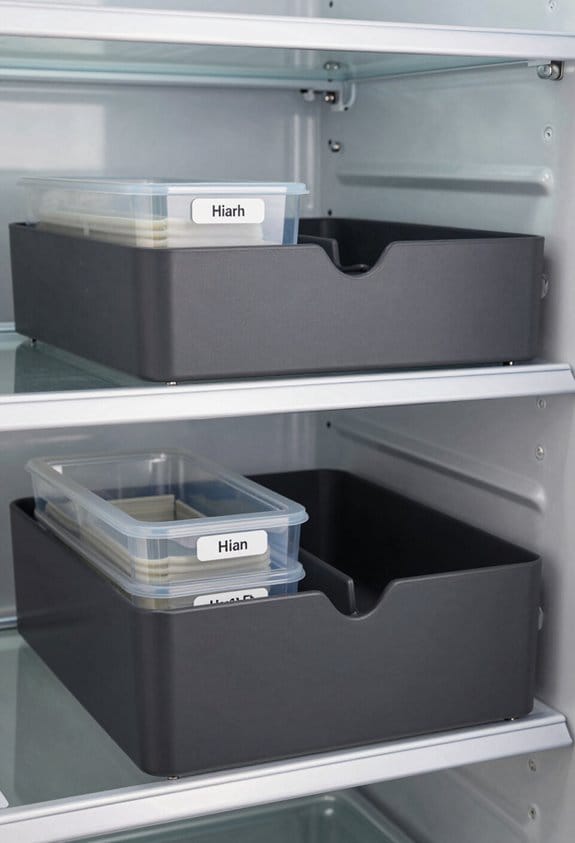
Sharing a fridge can be a recipe for disaster if personal zones aren’t clearly defined. Picture this: you open the fridge door, and it’s a chaotic mess of everyone’s goods. Yikes! To avoid stepping into that minefield, let’s break down how to designate personal space effectively.
First, think about dividing the fridge into specific areas. Label each section with your name or use colored tape to mark your territory. This simple step can help everyone easily spot their food. Plus, it visibly separates personal items from the communal shelves reserved for shared goodies.
Now, how do we handle overlapping storage? Establish some ground rules. For instance, agree on how much space each person can use and stick to it. Having a conversation about how to respect each other’s food can prevent plenty of misunderstandings down the line.
You might wonder how to keep things clean. A good practice is to do a fridge check-up every week to throw out expired food. Keeping your personal zone tidy not only helps you but also shows respect for your roommates.
Staying clear and open about fridge usage is crucial. If something is getting tight in there, a quick chat can go a long way. Tidiness promotes respect and keeps everyone’s belongings safe. Consider using airtight containers to maintain freshness and minimize spills, helping your zone stay organized and pleasant for all.
Use Transparent Containers and Label Everything

Storing food in shared fridges can get messy, fast. Ever opened a container just to find something unidentifiable? It’s frustrating! That’s why clear, transparent containers are a must-have for anyone living with roommates or family. They let you spot what’s inside at a glance, cutting down food waste and saving your sanity.
When it comes to organization, labeling is key. Each container should have the owner’s name and the date of purchase or preparation on it. This simple step can prevent a lot of mix-ups about who’s food is who and when it’s still fresh. Tracking expired items becomes a breeze, and you’ll know exactly what to toss before it turns into a science experiment in the back of the fridge.
To keep the shared space looking tidy and appealing, stick with containers that are similar in size and style when possible. This makes organizing easy and meal planning a snap. Trust me; a neat kitchen leads to easier cleaning, and nobody wants to be the one stuck scrubbing a junk-filled fridge. Using airtight containers can also maximize freshness and prevent spoilage, helping to keep food safer and longer-lasting.
Maximize Vertical & Stackable Fridge Storage

Is your fridge a chaotic mess? You’re not alone. Many of us struggle with organizing that crucial appliance. The secret? Making the most out of your vertical space and stacking things smartly.
First things first—stackable bins are your best friends. They create layers in your fridge and help keep items visible. Grab some clear containers to easily see what’s inside. If you can, install adjustable shelves or tiered organizers. This gives you extra space for smaller items, so you can stack without fear of toppling over.
Next, let’s talk about the fridge door. It’s the perfect spot for taller items like condiments and drinks. This frees up space in the main compartment while still allowing air to flow—keeping everything fresh.
Labeling is vital too. Use a label maker or some sticky notes to mark each bin with what’s inside and when it expires. This cuts down on confusion, especially in shared fridges.
Don’t cram everything in, either! Overpacking can hide food from sight and lead to spoilage. A clean fridge is an easy fridge.
To wrap it all up, using every inch wisely can transform your fridge from crowded chaos to organized bliss. Give it a try; you’ll be amazed at how much easier it makes meal prep and snack time! Plus, maintaining cleaning and maintenance routines can preserve freshness and prevent unwanted odors inside your fridge.
Create a Shared Zone for Communal Food
Living with others can be a juggling act, especially when it comes to sharing the fridge. Trust me, things can get chaotic if everyone is just tossing their groceries onto any shelf they claim. That’s why it’s a lifesaver to create a specific space for communal food items.
Start by designating a shelf or section in your fridge just for shared items. Make sure it’s clearly marked so everyone knows where to look. Using transparent containers is a smart move; not only do they keep things organized, but they also let everyone see what’s inside at a glance.
Here are some quick tips to keep the communal zone running smoothly:
- Label Everything: Take a moment to label your communal items. This way, there’s no confusion about whose leftovers are whose.
- Create a Buying Schedule: To keep essentials like milk and bread stocked up, establish a rotating shopping schedule. This way, every housemate gets a turn to contribute.
- Communicate: Openly talk about meal planning. Discussing preferences can help avoid waste and ensure that food is eaten before it goes bad.
To further maintain freshness and avoid spoilage, consider storing items in containers with good moisture-wicking materials.
In setting up this dedicated spot for shared food, we encourage accountability and order in what can often be a messy fridge. By doing this, everyone benefits. Plus, it helps to reduce those petty squabbles over mystery leftovers!
Keep the Fridge Clean Without Conflict
Navigating shared living spaces can be tricky, especially when it comes to the fridge. We’ve all been there: you open the refrigerator, and chaos reigns. Spoiled food, mismatched containers, and lingering odors can turn this essential space into a source of stress. So how do we keep the peace and the fridge clean without drama?
First off, labeling is key. Make it a habit to clearly mark your food with your name and when you bought it. This helps everyone know what’s theirs and what’s been around too long. You might wonder why this matters; it cuts down on confusion and potential ownership disputes.
Next, create a cleaning schedule. Each housemate should take a turn cleaning the fridge once a week. This not only spreads the responsibility but also keeps things hygienic. No one wants to dig into a messy fridge, right?
Don’t forget to keep an eye on spoiled food. Getting rid of rotten items promptly will save you from unpleasant odors and possible health issues. It’s definitely worth the effort to avoid tension among housemates.
Let’s talk about bulk buys and fridge territory. Before you stock up on groceries, chat with your housemates. Designating specific sections of the fridge for everyone can help manage space better. This way, shared items won’t take over your precious real estate.
Lastly, I recommend a “First In, First Out” system. Encouraging everyone to eat the older items first minimizes waste and makes sure nothing goes bad. It might seem a bit like a chore, but in the long run, you’ll find fewer surprises when you reach for a snack.
For emergencies or unexpected situations, having a 72-hour supply of essentials stored can also provide peace of mind for everyone in the household.
Talk Openly About Food Sharing & Boundaries
Living with others can be a fun adventure, but it can also bring challenges, especially when it comes to food. Spoiler alert: food sharing can lead to misunderstandings if we’re not on the same page. So, how do we avoid those sticky situations? Let’s dive into some practical tips.
First, set the stage early by talking about food sharing. It’s important to lay down some ground rules. Consider these:
- Food Labels: Grab some labels and mark your personal items. This simple step can save a lot of confusion.
- Organize Space: Create a system for where communal and personal items go. A little organization goes a long way.
- Communal Purchases: Agree on what food should be purchased together. This helps keep our grocery bills in check and avoids buying duplicates.
Regular check-ins about what we have in the fridge can also help. This way, everyone feels heard and respected. Do you find a particular snack disappearing too quickly? Bring it up! Addressing little issues before they become big deals keeps our space positive and encouraging.
Lastly, remember that open communication is key. By setting clear boundaries and sticking to these guidelines, we foster a sense of fairness. Living together doesn’t have to be stressful. With just a few conversations and a little respect, we can create a harmonious home where everyone enjoys what’s in the kitchen. Make the effort to keep the lines open, and you’ll all benefit. Happy sharing!
Additionally, for safety and preparedness, it’s wise to have easy access to emergency evacuation bags in case of sudden situations that require quick evacuation.
Frequently Asked Questions
What Is the 2 2 2 Rule for Food?
The 2 2 2 rule means eating or discarding opened perishable food and leftovers within two days. It’s great for food storage, promoting roommate etiquette, sharing meals, clear labeling, respecting personal space, and communication strategies.
How to Keep Your Food Safe From Roommates?
To keep our food safe from roommates, we use clear labeling, respect kitchen boundaries, and practice open communication about shared responsibilities. Offering snack alternatives also helps reduce conflicts, making food storage a smooth, respectful process for everyone.
What Is the Golden Rule for Roommates?
The golden rule for roommates is practicing communication etiquette—respectful boundaries and mutual agreements in shared spaces are essential. Using food labeling and open discussion helps with conflict resolution, ensuring everyone’s comfort and trust in our shared home.
How to Stop Flatmates From Stealing Your Food?
Let’s cut food theft at the root by treating communal fridges like no-go zones. With clear labeling, shared grocery lists, and open communication, we’re building trust and respect—turning fridge raids into a thing of the past.


