As an Amazon Associate, we earn from qualifying purchases. Some links on this site are affiliate links at no extra cost to you. Our recommendations are based on thorough research and editorial judgment.


Evacuating With Pets in the City: Carriers, Calm Routines, and Documents

When an evacuation hits, pets can add a layer of stress. It’s one thing to pack your emergency kit. But what about your furry friends? Making sure they’re ready to go is just as crucial.
You may be interested


Start with the basics. Ensure your pets have updated ID tags and microchips. That’s your lifeline if you get separated. Keep printed medical records handy and snap a recent photo of your pet. It’ll help if they go missing.
Next, think about carriers. Choose one that’s both secure and well-ventilated. Your pet should feel comfy inside. Introduce the carrier to them well ahead of time. This way, they can get used to it, and it’ll lessen their anxiety when the time comes to evacuate.
Keeping calm is key. Stick to their normal routines before and during the evacuation. Routine helps pets feel more stable even in chaotic situations.
Consider your travel route. Look for pet-friendly stops along the way. It’s also wise to have a list of emergency contacts who can help if you need extra support.
Practicing loading your pets into their carriers can ease the travel stress too. Make it a game so they see it as less of a chore.
In a nutshell, take these steps seriously to keep your pet safe during evacuations. It might feel overwhelming, but staying prepared ensures everyone makes it through safely. You got this!
Key Takeaways
- Choose a durable, well-ventilated carrier that fits your pet comfortably and secures them during the evacuation.
- Introduce the carrier before evacuation by placing treats and familiar items inside to reduce pet anxiety.
- Keep pet ID tags updated with current contact info and attach them securely to collars or carriers.
- Organize essential documents, including vaccination records, medical history, and care instructions, for quick access.
- Maintain a calm environment with soft voices and slow movements to help soothe your pet during evacuation.
Get Your Pet’s Important Documents and ID Ready
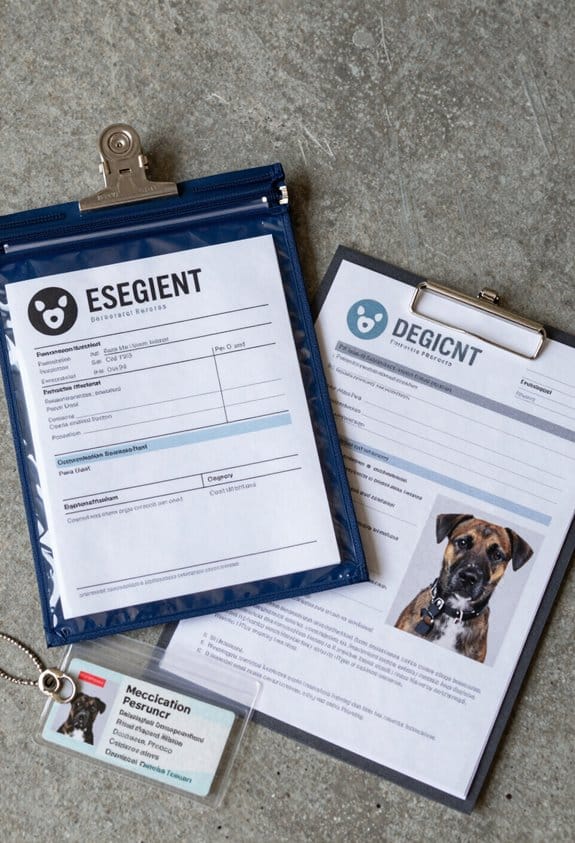
Evacuating with pets can be stressful, and the last thing you want is chaos when it’s time to flee. That’s why getting your pet’s important documents and ID sorted ahead of time is essential.
First, make sure your pet is equipped with a collar featuring an updated ID tag. This tag should have your current contact information and a backup phone number, just in case you’re out of the disaster zone when things get hairy. It’s a good idea to have them microchipped, too. This greatly increases the chances of being reunited if they go missing.
Having a current photo of your pet on hand can be a lifesaver when it comes to identification. Keep printed medical records handy—important things like vaccination records and any medications they might need should travel with you.
Here’s a quick checklist of must-have items for your furry friends:
- Updated ID tags
- Microchip registration details
- Recent photo
- Printed medical records
- Essential care instructions (feeding schedules, etc.)
Organizing all these documents near your pet carrier will help ensure you grab them quickly when it’s time to leave. Keeping everything in one spot can ease your stress and help your pet stay calm during an evacuation.
Also, consider including your pet’s supplies in a well-organized bug out bag to be prepared for emergencies where quick evacuation is necessary.
Don’t put this off. Get your pet’s important documents ready now so you can focus on what really matters—keeping your loved ones safe.
Choose the Right Carrier for City Pet Evacuations

When it comes to city evacuations, our pets look to us for guidance. It’s nerve-wracking, and having the right carrier can make all the difference. You want a carrier that fits your furball just right. Not too tight. They should have room to stand, turn around, and lie down comfortably.
Consider these key points:
- Size & Weight: Choose one that fits your pet well. They shouldn’t feel cramped.
- Material & Ventilation: Look for sturdy materials that allow airflow. This keeps them calm during transit.
- Secure Closures: Chaos can lead to escapes. Make sure the carrier has reliable latches.
- Identification & Documents: Keep IDs and any essential papers organized. This way, they’re easy to grab if you need them.
Before any evacuation plan, introduce your pet to their new carrier. Let them sniff it, explore it, and even nap inside. This simple act can drastically decrease their anxiety when the real deal hits. Choosing carriers made from durable materials ensures your pet’s safety and longevity of the equipment during stressful situations.
Help Your Pet Stay Calm With Familiar Routines

Moving can be a stressful time for pets. You want to help them feel safe and secure, right? One great way to achieve this is to keep their routines as familiar as possible. Consistency is key!
Here’s how to do it:
- Stick to Feeding and Walking Schedules: Feeding and walking at the same times every day creates a sense of normalcy. It’s like a comforting anchor amidst all the chaos.
- Use Familiar Commands: Whether it’s “sit,” “stay,” or “come,” using those usual cues reminds your pets of home and can ease their anxiety.
- Practice Loading Them in Their Carrier: Regularly training your pet to enter the carrier helps them become comfortable with it. They’ll be less fearful when it’s time to evacuate.
- Include Their Favorite Items: Pack favorite toys or a cozy blanket in the evacuation kit. Familiar scents can soothe pets during uncertain times.
Truth is, these simple steps create a calm environment that helps your pet adjust to change more smoothly. When chaos strikes, keeping your routine intact goes a long way in ensuring your pet feels secure and cared for. Focus on these basics, and you’ll help your furry friend navigate tough situations with ease. You’ve got this! Also, protecting your pet’s eyes during evacuation is important, so consider using dust-proof safety glasses to shield them from debris and irritants.
Plan Your Evacuation Route With Pet-Friendly Stops
Emergencies can catch us off guard and force us to leave home in a hurry. It’s a stressful situation, especially when we have our furry friends to think about. Planning an evacuation route with pet-friendly stops is crucial for ensuring that our pets stay safe and comfortable during the chaos.
Start by mapping out stops along your route that welcome pets. Look for:
- Pet-friendly hotels
- Animal shelters
- Rest areas that allow pets
Check their policies to avoid surprises, like breed or size restrictions. You want to be sure those places are truly welcoming to your four-legged companions.
It’s also smart to create a list of emergency contacts and alternate destinations. If plans change, you’ll want options that accommodate pets on standby. And don’t forget about transportation! Some vehicles or travel routes may not allow pets, so check in advance to avoid a last-minute scramble.
Planning for your pets may take some effort, but it pays off. A well-thought-out route means less stress for you and more comfort for your pets. Update your plans and contacts regularly. Stay prepared and make your evacuation plan as smooth as possible.
Life can be unpredictable, but with a little foresight, you can ensure your pets are taken care of in any situation. Keep your loved ones close and your plans even closer! Adding durable and waterproof repair tapes to your emergency kit can help fix carriers and gear quickly during your evacuation.
Practice Loading and Travel to Ease Your Pet’s Stress
Evacuating with pets can be a daunting task, but it doesn’t have to be. Trust me, the key to making it smoother is practice. I’ve learned that getting your pets used to loading and traveling can ease a lot of their anxiety. So, let’s break down how to make this work for you and your furry friends.
Start by placing the carrier in a busy part of your home. This way, your pet sees it regularly, which helps normalize it. Use treats to encourage them to hop in on their own. It might feel a bit silly at first, but think of it as creating a fun game rather than a chore. The more you practice, the more familiar they’ll become with the process, and that means less stress when it’s time to go.
- Maintain a Calm Atmosphere: Soft voices and slow movements can go a long way in reassuring your pet. They pick up on your energy, so staying calm is crucial.
- Include Comfort Items: Toss in their favorite blanket or toy. Familiar smells can provide a comforting boost during travel.
- Keep Important Docs Handy: Make sure your pet’s vaccination records are up-to-date and easily accessible. If you have to evacuate, you won’t want to scramble for these documents at the last minute.
Using rolling bags with smooth maneuverability can help ease the transport of pet supplies during evacuation.
Practicing loading regularly in a peaceful environment guarantees that your pets will feel safe and secure when the real evacuation happens. You’ll find that it smooths out the whole travel experience, making it a lot easier for both you and your pets.
In short, preparing isn’t just about packing a bag. It’s a crucial part of keeping your pets calm and protected. So get started on these maintenance practices, and your next evacuation will be a breeze!
Update and Display Your Pet’s Identification During Travel
Traveling with pets can be both exciting and nerve-wracking. One major concern is making sure your furry friend is easily identifiable should they wander off or get lost. You want to have peace of mind while you’re exploring the world together, right?
To kick things off, here’s what you should do to ensure your pet’s identification is top-notch and ready for travel:
- Update Tags: Make sure your pet’s identification tags have your current contact info, their name, and any crucial medical details.
- Secure Attachment: Fasten those tags securely to their collar or carrier. Give them a good look to ensure they’re legible. If you spot any signs of wear or fading, swap them out before you head out.
- Microchipping Matters: Getting your pet microchipped is a must. This tiny chip can be a lifesaver, providing a permanent ID to help reunite you if you get separated.
- Current Photo: Keep a recent picture of your pet in your emergency kit—this can help authorities quickly recognize your furry friend if needed.
- Display Identification: While you’re traveling, make sure their identification is prominently displayed on their carrier. This way, anyone who finds your pet can reach you right away.
Additionally, using carriers with touchscreen compatible features can help you stay connected with your devices without removing your gloves during travels.
Stay proactive, and take these steps before you hit the road. By keeping your pet’s identification updated and visible, you set yourself up for a stress-free adventure. With a little preparation, your travels can be a bonding experience instead of a worry fest. So pack up and enjoy the journey with your best buddy by your side!
Frequently Asked Questions
What to Do With Pets During an Evacuation?
Oh sure, let’s just toss our pets in anything! Instead, we focus on pet carrier selection, pack an emergency pet kit, plan evacuation routes, use calm handling techniques, prep health documents, and study local shelters and pet-friendly hotels for safe transport.
What Are the 7 P’s of Evacuation?
The 7 P’s of evacuation are Proper Planning, People, Pets, Prescriptions, Important Documents, Valuables, and Home. They guarantee Emergency Preparedness with Safety Kits, clear Evacuation Routes, Communication Plans, Family Roles, Area Maps, Shelter Options, Essential Supplies, Vehicle Readiness, and Health Records.
What Is the Pets Evacuation and Transportation Standards Act?
Did you know 62% of pet owners delay evacuations without proper plans? The Pets Evacuation and Transportation Standards Act guarantees pet safety through transportation regulations, shelter requirements, and coordinated disaster response, highlighting owner responsibilities and public awareness for emergency preparedness.
What Are the 5 Stages of the Evacuation Process?
We follow five stages: plan shelter options and evacuation zones, gather pet supplies and emergency kits, practice behavior management with transportation methods, monitor communication plans using local resources, and secure health records and safety tips for a smooth evacuation.


