As an Amazon Associate, we earn from qualifying purchases. Some links on this site are affiliate links at no extra cost to you. Our recommendations are based on thorough research and editorial judgment.


Creating a “Power Budget” for a 48-Hour Grid Failure

A power outage can strike when you least expect it, leaving you scrambling to keep your essentials running.
You may be interested


Let’s talk freezers first. They can draw between 100 and 400 watts while running, and let’s not forget the surge power needed when the compressor kicks on — that can be as high as 1200 watts.
Next up, think about the essential devices you don’t want to lose during a grid failure.
- LED lights – Great for low energy use
- Phone chargers – Keeping you connected
- Wi-Fi routers – You need the internet!
Take note of the wattages for each of these devices. Want to estimate your needs? Multiply the running wattage of your freezer and other devices by 48 hours. This gives you a ballpark figure for the total energy you’ll need.
Now comes the fun part: picking your backup power source. Options like portable power stations or whole-house batteries can be lifesavers, but make sure they have enough capacity and can handle that surge power when your freezer fires up.
One big tip? Keep the freezer closed as much as possible during an outage. If you have any power left, prioritize which devices you’ll use first.
Oh, and don’t skip the testing phase. Regularly check your setup to ensure everything runs smoothly when you need it the most.
By planning for these situations and maintaining your gear, you can be ready for almost anything.
Stay prepared, and you’ll find peace of mind even in a blackout.
Key Takeaways
- Calculate freezer running and starting watts, budgeting up to 1200 watts for compressor surges during the 48-hour outage period.
- Prioritize power for essential devices: freezer, refrigerator, LED lights, phone chargers, and Wi-Fi routers.
- Choose a backup power system matching total wattage needs, such as portable power stations for small loads or whole-house battery systems for larger demands.
- Operate appliances sparingly and keep the freezer packed to maintain temperature and conserve backup power efficiently.
- Regularly test and maintain backup systems every 3 to 6 months to ensure reliable performance during outages.
Calculate Your Freezer and Essential Devices’ Backup Power Needs
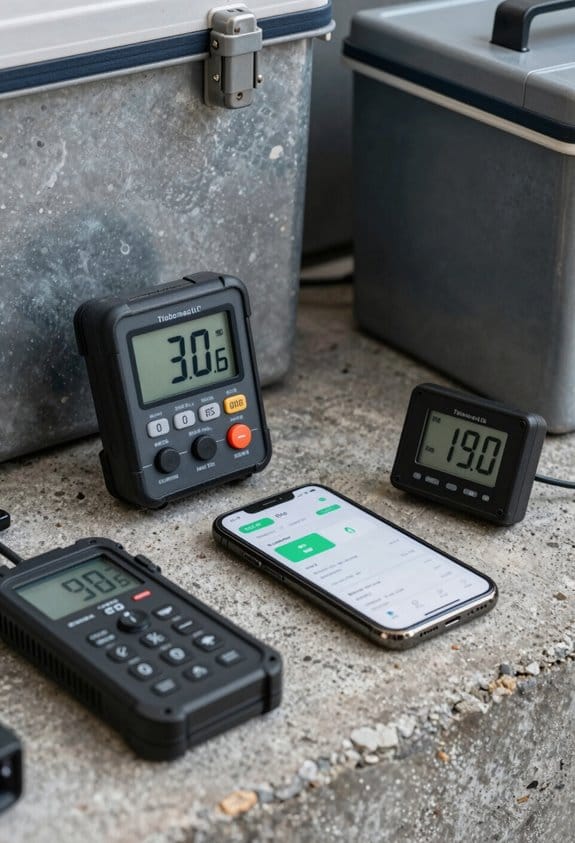
Have you ever found yourself wondering how to keep your food safe during a power outage? Believe me, a backup power plan for your freezer isn’t just a luxury; it’s a necessity. Let’s break down what you really need to know.
First things first, you need to identify your freezer’s running wattage, which usually ranges from 100 to 400 watts. What’s crucial to understand is that when the compressor kicks in, it can draw 2 to 3 times that running wattage. So, your backup battery system should be ready to handle up to 1200 watts to cover those spikes.
Here’s a quick guide to making a power budget:
- List the running watts of your freezer.
- Include the starting watts (which can be 2-3 times the running watts).
- Don’t forget about other essential devices you rely on.
Creating this power budget ensures that your backup can manage sudden surges without failing. You might be relieved to hear that a well-stocked freezer can keep food safe for about 48 hours if the door remains closed. So, when you’re designing your backup power system, aim for that 48-hour mark.
Also, it’s a good idea to test your battery backup every three to six months. This will give you peace of mind, knowing it’s ready when you need it most. For added efficiency, consider focusing on devices with adjustable power consumption to optimize your backup system’s capacity.
Identify and Prioritize Devices to Keep Running During Outages

Power outages can really throw a wrench in our daily lives, right? When the lights go out, the first thing on your mind should be which devices to keep running. Here’s my personal take on prioritizing what needs to stay powered up during those frustrating times.
First off, think about your essentials. Freezers and refrigerators are at the top of the list because, let’s face it, we don’t want our food going bad. These appliances rely on a steady electric supply to keep everything frozen or chilled. After those, you’ll want to ensure you can light up your space safely and keep in touch with the world. So, keep these in mind as your top picks:
- LED lights for visibility
- Phone chargers to stay connected
- Wi-Fi routers to maintain communication and comfort
Next, let’s talk power requirements. It’s crucial to identify the devices with the highest starting wattage. This is important because it makes a big difference in your total power needs. Create a list of the running watts for each of your prioritized devices. This way, your backup power system—whether it’s a battery bank or a generator—can handle peak demand without blowing a fuse. Plus, keeping your freezer full helps insulate it, maximizing its ability to keep contents frozen longer.
Using an emergency power supply with multiple charging methods ensures your backup can stay operational through various conditions.
As you prepare for the unexpected, prioritize your power needs wisely. It will help you maintain essential functions, ensuring your household runs smoothly during an outage. Stay proactive, gear up, and you’ll weather those storms—literal or figurative—with greater ease.
Choose the Right Backup Power System for Your Home Setup

Power outages can really throw a wrench in your plans, right? Knowing which devices we need to keep running during those unexpected blackouts is just the beginning. The next step is crucial: selecting a backup power system that fits your home setup perfectly.
First, consider the total wattage you need. This includes both the starting and running power for important appliances like your freezer and refrigerator. Here are some options to think about:
- Portable Power Stations: They’re quiet and don’t emit harmful gases, making them perfect for smaller setups. However, keep in mind their capacity may be limited.
- Whole-House Battery Systems: If you want more reliability, go for a whole-house battery or home battery backup system. These can handle larger loads and provide seamless power when the grid fails. For instance, models like the Anker SOLIX F3000 can meet surge demands and let you charge devices at the same time.
Additionally, considering devices with long battery life can ensure your essential appliances stay powered longer without frequent recharging.
Deciding on the right backup power system is all about matching it to your energy needs and how much maintenance you’re willing to handle. After all, you want it performing well during that 48-hour outage.
Being informed and prepared is key. Choose wisely, and you’ll handle any power interruption like a pro.
Set Up and Use Your Backup Power Safely
Power outages can throw a wrench into your day. But having a backup power system is like having a safety net. Just as important as having that safety net, however, is knowing how to set it up and use it without risking harm to yourself or your home.
Start by placing portable power stations in dry, stable areas. Moisture can damage them, and we definitely want to avoid that. If you’re using a gas generator, make sure it’s parked outside—far away from windows, doors, and vents. This is crucial to prevent carbon monoxide from sneaking into your home. It’s a hidden danger, and we can never be too careful.
When you need to power indoor devices, use heavy-duty, outdoor-rated extension cords. These cords are designed to handle the load without overheating. And please, never back-feed your home through wall outlets. This not only puts you at risk but also jeopardizes the safety of utility workers trying to restore power. The last thing we want to do is put someone else in danger!
How do you keep your backup system reliable? Test it every three to six months. Run a full discharge and recharge cycle to ensure everything is working as it should. This will give you peace of mind that when you need power, your system won’t let you down.
Consider storing emergency water with durable water bladder storage solutions to stay hydrated during outages.
Taking these steps can significantly reduce dangers during outages. Remember, being prepared is only part of the journey. Let’s stay safe out there!
Optimize Backup Power Use to Extend Runtime During a Grid Failure
When the power goes out, it can be a real scramble. Trust me, I’ve been there. Backup power resources don’t last forever, so it’s crucial to be smart about what you plug in. Don’t leave things to chance.
Start by listing out your must-have appliances. Think about your freezer and refrigerator—these are key for food safety. Check the wattage for each and make sure your backup system can handle them together. It’s a juggling act, but prioritizing these appliances can make all the difference.
Here are a few tips to help you conserve power:
- Limit Usage: Operate appliances only when absolutely necessary. Every little bit helps.
- Fill the Freezer: A packed freezer stays colder for longer. Plus, it cuts down on the number of times the compressor kicks in.
- Use Energy-efficient Devices: They might cost a bit more upfront, but they save on energy bills and extend runtime during outages.
- Disconnect Non-essentials: Anything that isn’t critical should be unplugged. It’s a simple way to prevent wasting power.
In addition, understanding energy-efficient devices will help optimize power consumption and extend your backup runtime.
Test and Maintain Your Backup Power System for Reliability
We all know how unsettling a power outage can be. After you’ve survived one with a backup power system, the last thing you want is for that same system to let you down the next time. That’s why regular testing and maintenance is key to keeping your backup power game strong.
Aim to test your systems every three to six months. Here’s how:
- Portable power stations: Make sure to fully discharge and then recharge it. This helps confirm that it can still hold its capacity.
- Gas generators: Run them under load for about 20 to 30 minutes regularly. Don’t forget to circulate fresh oil and fuel to help them run smoothly.
- Storage tips: Keep all your equipment in dry, stable spots. Moisture and extreme temperatures can do a number on your gear.
Additionally, consider storing emergency essentials in fire-resistant and waterproof bags to protect critical items during outages.
Why bother with this routine, you ask? Well, it’s all about avoiding nasty surprises when the lights go out. Plus, it ensures that your food and supplies stay safe and sound during outages.
Staying disciplined with your maintenance means you’re always ready for whatever power failure life throws your way. After all, a reliable backup system isn’t just a convenience; it’s a lifesaver.
Frequently Asked Questions
How to Prepare if the Grid Goes Down?
Let’s picture flickering lights as we gather emergency kits, conserve energy, store food wisely, plan communication, and secure water supply. Together, we’ll stay calm and prepared, ensuring safety and comfort if the grid ever goes down.
How to Prepare for Prolonged Power Outage?
We’ll stock emergency lighting, guarantee food storage stays safe, secure a reliable water supply, and invest in battery backup and heating solutions. Staying prepared means covering all essentials for comfort and safety during prolonged outages.
What to Buy for Power Grid Outage?
We’ve learned that freezers can hold cold for 48 hours if kept closed. So, we recommend buying emergency supplies, renewable energy gear, reliable portable generators, food storage solutions, and communication devices to stay safe and connected.
How to Survive 3 Days Without Electricity?
To survive 3 days without electricity, we rely on survival strategies like keeping emergency supplies handy, using alternative energy sources, securing food storage, and establishing communication plans to stay informed and connected throughout the outage.


