As an Amazon Associate, we earn from qualifying purchases. Some links on this site are affiliate links at no extra cost to you. Our recommendations are based on thorough research and editorial judgment.


How to Run a Home Prepping Audit in a Small Apartment (Room by Room)

Are you living in a small apartment and wondering how to be better prepared at home? You’re not alone! Prepping in tight spaces can feel tricky, but it’s totally doable with a bit of strategy.
You may be interested


Let’s dive into how you can audit your home room by room and boost your readiness.
Start in the kitchen. Check your food storage first. Aim for a two-week supply of non-perishable items. Rotate these out every six months to keep them fresh. Keep perishables at safe temperatures to avoid waste.
This simple step helps ensure you won’t be scrambling if something unexpected happens.
Next up, let’s talk about living areas. You need multifunctional furniture. Think about a coffee table that doubles as storage or an ottoman that can hold blankets.
This will not only reduce clutter but also create more space for your essentials.
Moving to the bedrooms, it’s all about smart storage. Use under-bed containers for seasonal clothes or extra linens. An organized space means you can find what you need when you need it.
Also, don’t forget to whip up a compact first-aid kit. Life has a way of throwing surprises, and being prepared can make a big difference.
Safety gear is equally critical. Check smoke alarms, fire extinguishers, and your basic tools. Ensure everything is easily accessible.
You don’t want to waste precious time hunting for these items in an emergency.
Lastly, your prepping supplies should be clearly labeled and inventoried. This not only helps you find what you’re looking for but also makes it easy to replenish your stock as needed.
You want to know exactly what you have on hand.
By going through these steps, you’ll set yourself up for practical and thorough preparedness in your apartment. So, grab a notepad and start your audit. You got this!
Key Takeaways
- Inventory all non-perishable food and water supplies, checking expiration dates and rotating stock every six months to prevent waste.
- Assess living space storage by utilizing multifunctional furniture and vertical shelves to organize prepping supplies efficiently.
- Inspect and restock safety gear like smoke alarms, fire extinguishers, first aid kits, and emergency tools in accessible locations.
- Create designated bins for categorized supplies with clear labels and maintain updated inventory lists featuring stock rotation details.
- Optimize bedroom storage with under-bed containers and vacuum-sealed bags for seasonal items and easily accessible emergency medical kits.
Check Food, Water, and Rotation Practices in Your Kitchen
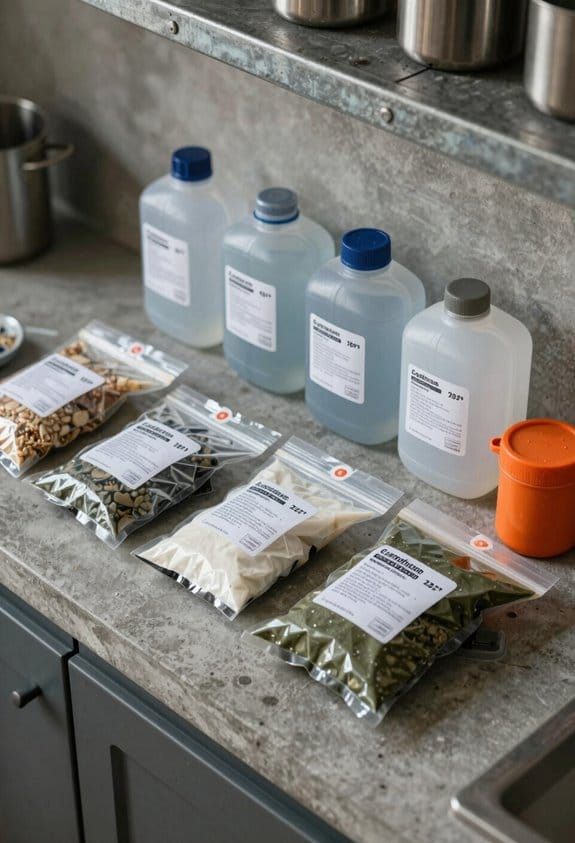
When was the last time you checked your kitchen supplies? It can be easy to overlook, but keeping track of food and water is crucial—especially if an emergency strikes. I’ve learned how vital it is to have a solid two-week stash of non-perishable foods. Not just any foods, but items that fit everyone’s dietary needs.
Take a quick inventory. Is your pantry packed with expired items? Are perishables kept at the right temperature in the fridge? Don’t forget to check on your water heater; it plays a big role in ensuring water is hot enough for cleaning and cooking.
One of my best tips? Rotate your food storage regularly. Every six months, I go through my supplies and remind myself to use the older stuff first. This strategy helps prevent waste and keeps things fresh.
Also, water is a biggie. Aim for at least one gallon per person each day, and plan for a minimum of three days. If you think you may face a longer crisis, adjust your stash accordingly.
Oh, and vacuum sealing is a lifesaver. It can dramatically extend the shelf life of your food, so if you can, incorporate that technique into your storage routine. Using stackable organizers can also help maximize your pantry space and keep food items neatly arranged for easy access.
Establishing and maintaining these practices not only keeps you ready for anything life throws at you, but it also helps cut down on food waste.
Stay prepared, and keep your supplies fresh. You’ll be glad you did when the unexpected happens!
Maximize Storage in Living Areas With Multifunctional Furniture

Living in a tight space often comes with the challenge of limited storage. It can feel overwhelming, but I’ve found that you can maximize storage without giving up comfort.
Start by selecting multifunctional furniture. For instance, storage ottomans are fantastic—they offer hidden space for everything from blankets to games and can double as extra seating. Coffee tables with built-in compartments are another great choice. They keep your essentials within reach while helping to manage the clutter.
Consider a sofa bed. You get a cozy seating area that transforms into a sleeping space when needed. This setup is perfect for making your living room more versatile.
Vertical storage is your friend too. Wall-mounted shelves or foldable desks keep your floor space clear. They’re easy to put up and can hold decor, books, or office supplies without crowding your area.
Don’t forget organization. Set up designated spots for cleaning supplies or small prep items to keep everything tidy and accessible.
Choosing furniture that serves dual purposes boosts the efficiency of your space while ensuring you have what you need close by. Embracing these tips can transform your compact living area into a functional oasis. Trust me, living small doesn’t have to mean living with chaos! Additionally, selecting items made from lightweight materials helps maintain mobility and comfort in small spaces.
Use Under-Bed Storage and Organize Medical Supplies in the Bedroom

If you’re like me, you know how cluttered a bedroom can become, especially when it comes to storage. One of the best tricks I’ve discovered is utilizing the space under the bed. It’s an often overlooked goldmine for keeping things organized and out of sight, yet easily accessible.
First off, I highly recommend using under-bed storage containers. These come in handy for everything from seasonal clothing to shoes and even emergency supplies. For example, vacuum-sealed bags work wonders for compressing bulky items like blankets. They protect your items from dust and moisture, making them a smart choice for maximizing space while keeping everything fresh.
Now, let’s talk about being prepared for emergencies. It’s crucial to have a designated storage bin specifically for medical supplies at arm’s reach. Fill it with essentials like:
- Band-aids
- Antiseptics
- Essential medications
Don’t forget to label everything clearly; it saves time when you’re in a pinch. Plus, keep a compact first aid kit under your bed, easy to grab whenever needed. Make sure this kit contains basic items like pain relievers and emergency contact information. No one wants to fumble around in a crisis!
Surprisingly, the task doesn’t stop once you’ve stocked these supplies. Regularly checking the expiration dates is vital to ensure you’re always ready. I keep a written inventory of everything in my medical bin, so I know exactly what I have on hand. For added safety, consider using plug lockouts on electrical devices nearby to prevent accidental shocks or unauthorized use.
Check Your Safety Gear and Emergency Tools Around the Apartment
Keeping your safety gear and emergency tools in check is vital for peace of mind at home. I can’t tell you how many times I’ve heard stories about smoke alarms failing during a fire. To prevent this from happening, make it a habit to test your smoke alarms every month. And don’t forget to swap out those batteries at least once a year. It’s a small task that can make a huge difference in an emergency.
Positioning a fire extinguisher in your kitchen and other key spots is crucial. Choose one that’s effective for typical household fires—think grease and electrical. You never know when you might need it, so make sure it’s easily accessible.
The first-aid kit? Check it regularly. Go through the contents and toss out anything expired. Restock on essentials like band-aids, antiseptics, and pain relievers. It’s comforting to know you can treat minor injuries quickly.
Having multi-purpose tools, like a Swiss Army knife, within reach is a smart move. Keep them in spots you can access quickly, so you’re not fumbling around when you need them the most.
Don’t underestimate the importance of being prepared for power outages. Keep your portable power banks charged and stored nearby. Power disruptions happen, and being ready for them can relieve a lot of stress.
Lastly, practice your fire escape plan. Everyone should know their role. Regular check-ins mean no surprises if an emergency strikes.
Including organized compartments in your emergency gear storage can save crucial time during a crisis.
Staying proactive with your safety gear is a straightforward way to protect yourself and your loved ones. So, take the time now—it’s worth the peace of mind!
Organize and Maintain Prepping Supplies for Easy, Quick Access
When it comes to prepping, organization is key. Let’s face it: chaos in your supplies can lead to panic in an emergency. Start by checking all your safety gear and emergency tools. Once you’ve confirmed they’re good to go, it’s time to get everything sorted.
Use clear bins. Label each one with its category, like food, water, medical kits, and tools. This way, you can grab what you need without digging through a mess. Keep these bins in specific, easy-to-reach spots throughout your home. Got extra closet space? Add shelves. Empty space above cabinets? Put it to good use!
An updated inventory list is non-negotiable. Note expiration dates so you can rotate stock. Adopt a first-in, first-out method. This tactic will help you minimize waste and ensure that you always have fresh supplies on hand.
Consider multi-functional furniture. Pieces that serve dual purposes, like ottomans with hidden storage, can keep your prepping supplies discreet yet accessible. Who wants to pull out a box of supplies in a crisis? Not me!
To wrap up, efficient organization of your prepping supplies adds peace of mind. You’ll be ready when it counts. So take a little time now to set things up—it’ll be worth it when the unexpected happens! Using sturdy, water-resistant storage options made of 900D Oxford nylon can protect your supplies while keeping them organized and accessible.
Frequently Asked Questions
Can I Do a Home Energy Audit Myself?
Yes, we can do a home energy DIY audit ourselves using basic audit tools. By checking drafts and insulation, we uncover energy savings opportunities and apply efficiency tips, making our home more comfortable without the cost of professionals.
How to Maximize Space in a Small Apartment?
To maximize space in our small apartment, let’s use space-saving solutions like multi-functional furniture, vertical storage shelves, and creative organization. Decluttering tips help us keep essentials only, making room feel open and manageable for everyday living.
How to Fit Everything in a Small Apartment?
Did you know we use only 40% of our vertical space? To fit everything, let’s embrace storage solutions, multi-purpose furniture, vertical spaces, decluttering strategies, and minimalist living to maximize every inch in our small apartment.
How Do I Prepare for an Energy Audit?
To prepare for an energy audit, let’s gather bills for cost benefit analysis, list comfort issues, and clear access to appliances. We’ll focus on energy saving tips, appliance efficiency, insulation improvements, and lighting upgrades to maximize results.


