As an Amazon Associate, we earn from qualifying purchases. Some links on this site are affiliate links at no extra cost to you. Our recommendations are based on thorough research and editorial judgment.


How to Store Emergency Supplies Discreetly in Small Spaces

When it comes to storing emergency supplies in small spaces, it can feel like a puzzle. You want to be prepared without turning your home into a chaotic storage unit. Trust me, I’ve been there, and I’ve found some great strategies that really work.
You may be interested


Start by looking up—you can maximize vertical storage by putting in ceiling-high shelves. Not only does this free up floor space, but it also gives you easy access to your supplies. Clear, stackable containers are a lifesaver here. Label them in a way that blends with your decor, so they don’t stick out. You might be surprised at how well that works!
Consider multi-functional furniture, too. Ottomans or coffee tables with hidden compartments can disguise your supplies while serving a purpose. Under-bed containers are another clever idea. They fit neatly out of sight and are perfect for keeping essentials like food and water organized.
You could also get a little creative. Concealing supplies behind false panels or inside hollow furniture keeps everything discreet. It feels smart and on top of things, right?
Staying organized is key. Keep an inventory of what you have and check expiration dates regularly. Rotating items with a First In, First Out (FIFO) method helps ensure nothing goes to waste.
Incorporating these methods can really boost your readiness while keeping your space clutter-free. You’ve got this! With a bit of creativity, you’ll find a way to store your emergency supplies that works for your home and keeps you ready for anything.
Key Takeaways
- Utilize vertical shelving and hidden compartments in furniture to maximize and conceal emergency supply storage in small spaces.
- Store supplies in hollow furniture, under beds, or behind false panels to keep them out of sight yet accessible.
- Use stackable, clear containers with discreet labeling to organize items efficiently without cluttering the space.
- Repurpose suitcases, shoe boxes, and other household items as pest-proof, camouflaged storage bins.
- Regularly inspect, rotate, and maintain supplies in compact, multi-functional furniture for both convenience and stealth.
Maximizing Vertical and Hidden Storage Spaces
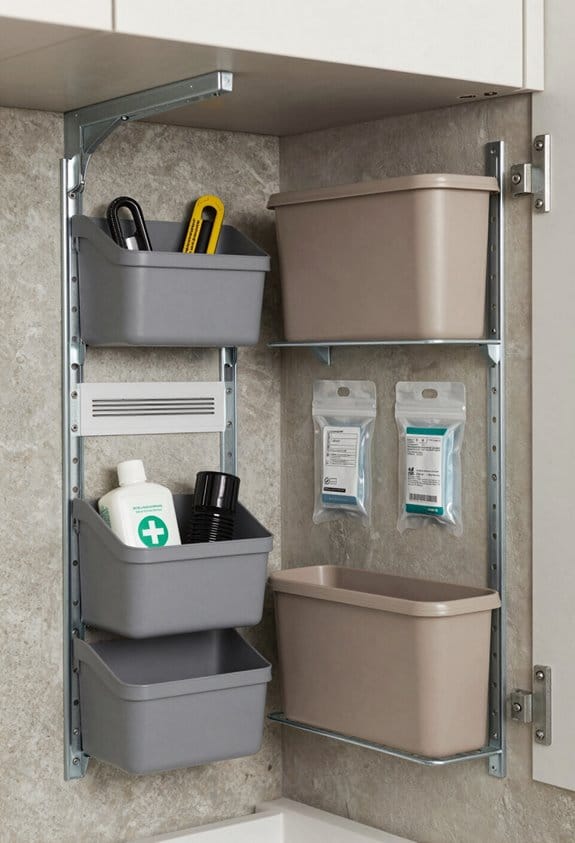
Are your emergency supplies taking over your space? It’s a common struggle, but there’s a simple solution: maximize your vertical and hidden storage. Let’s dive into some easy strategies that really work.
First off, take a close look at your walls. You’d be surprised at how much height you can capitalize on. Consider these tips:
- Install shelves that reach the ceiling. Not only does this create more storage, but it also frees up floor space.
- Stack tall storage containers designed for food and essential gear. They can stand in the corners or alongside walls without cramping your style.
Now, let’s talk organization. Labeling bins is key. Choose bins that blend with your decor, so your emergency supplies don’t yell for attention. It’s about keeping things discreet, yet easily retrievable.
Hidden storage can be a game-changer. Think about these creative options:
- Create secret compartments in your stairs. If you’re handy, this can provide an excellent way to stash supplies.
- Use false panels to conceal items behind your furniture. Nobody will know they’re there but you!
Let’s not forget the spaces above kitchen cabinets or under beds. These are often neglected spots, but with discreet storage containers, they can become your secret stash areas.
In short, maximizing vertical and hidden storage lets you keep emergency supplies safe and out of sight. By implementing these methods, you can enhance your living space’s organization and maintain peace of mind. Get started today; you’ll be amazed at the difference it makes! Using storage materials with waterproof properties ensures your emergency supplies stay dry and protected over time.
Choosing Containers and Furniture for Small-Space Emergency Storage

When it comes to storing emergency supplies in tight spaces, choosing the right containers and furniture can feel like a daunting puzzle. Small spaces are tricky, but with the right strategies, you can make the most of what you’ve got. Think about this: the key is to select stackable, clear containers. They not only maximize visibility but also save vertical space, which is often at a premium. You’ll be able to spot what you need quickly—no digging through piles of stuff.
Multi-functional furniture is a smart choice, too. Consider ottomans or coffee tables that come with hidden compartments. These pieces pull double duty, providing seating or a surface while discreetly hiding your supplies. You might wonder if it’s wise to use dark or recycled containers. Here’s a pro tip: labeling them misleadingly keeps your emergency stash out of sight from nosy eyes, while still keeping everything organized.
Let’s talk about IKEA’s KALLAX. This clever design can enhance both security and organization. Picture this: secret panels that keep your supplies safe while remaining stylish. Under-bed storage is another brilliant option. Use opaque bins tucked underneath and covered by bedding. This way, your emergency gear is out of sight but easily accessible when you need it. Additionally, incorporating waterproof materials into your storage solutions ensures your supplies stay protected from moisture damage even in small confined spaces.
Storing Water and Food Efficiently in Small Spaces
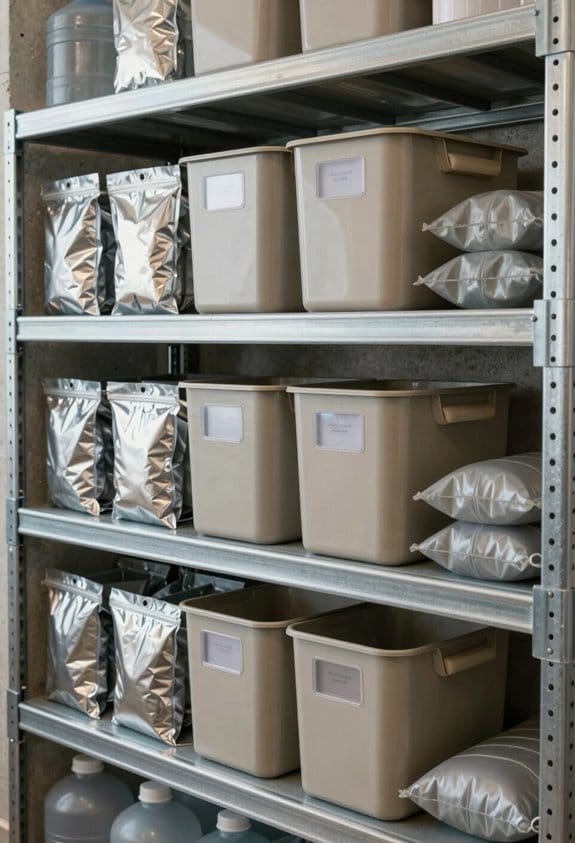
Living in a small space can really cramp your style, especially when you’re trying to stock up on food and water for emergencies. Trust me; I’ve been there. But there’s good news! You can make the most out of every tiny nook. Let me share some tips that have worked wonders for me.
- Under-Bed Containers: Don’t let that empty space go to waste! Storing bins under your bed is a great way to stash away water and food.
- Stackable Bins: They’re a lifesaver. You can pile these up to save vertical space and keep everything neat and organized.
- Collapsible Water Jugs: When the water’s running low, these are super handy. They collapse when not in use, freeing up precious storage.
- Choose Smart Food Options: Go for compact, shelf-stable foods like canned goods, rice, and freeze-dried meals. They last long and don’t take up much room.
- Install Shelves: Wall-mounted racks can elevate your storage game. You’ll be surprised how much floor space opens up when you go vertical.
Managing expiration dates is key. I recommend the first-in, first-out system. Rotate your stock every six to twelve months to keep everything fresh. Using airtight containers helps maintain food freshness and prevent spoilage over time. With these easy steps, you’ll have reliable, readily accessible food and water when you need it most. Plus, there’s a sense of satisfaction that comes with being organized in a cramped space.
Organizing Emergency Supplies to Stay Ready and Clutter-Free
Staying prepared for emergencies can sometimes feel overwhelming, especially when space is tight. You might be cringing at the thought of clutter piling up. So, how do we tackle this? Let’s talk about organizing those emergency supplies efficiently.
First, think vertical. Use your walls. Wall-mounted shelves are a great way to keep essential supplies accessible without taking up much floor space. Stackable containers can help keep similar items together, like your emergency food supplies. Opt for compact options—freeze-dried meals, beans, and other lightweight items can fit neatly in smaller corners of your home.
Next, don’t overlook furniture that pulls double duty. Look for multi-functional pieces with hidden compartments to store emergency items. This way, you can keep things out of sight while still being ready for anything life throws your way.
Keeping a detailed inventory is crucial. Believe me, knowing exactly what you have can save you from panic later. Practice the FIFO (First In, First Out) method to ensure your supplies get rotated. This helps you avoid spoilage and makes sure you’re always working with fresh goods.
And don’t forget to check in on your stock regularly. Rearranging supplies might feel tedious, but it’s key to staying organized and ready for action.
To sum it up, organizing your emergency supplies doesn’t have to mean chaos. With a bit of planning, you can make sure you’re ready without a cluttered mess. Consider using stackable containers to optimize storage space efficiently. Now take these tips and start creating your own organized sanctuary for emergency essentials!
Using Household Items to Conceal Emergency Supplies
Keeping emergency supplies hidden yet accessible can feel like a challenge. But trust me, there are clever ways to make it work using stuff you probably have around the house.
Here’s how you can get started:
- Hollow furniture: Think about ottomans or end tables. These pieces can hold canned food and other survival gear without taking up extra space in your home.
- Empty suitcases and shoe boxes: These are perfect for keeping food items safe from pests and sunlight. Plus, they can be tucked away in closets or under beds.
- Shelves and wall organizers: You can place your emergency supplies behind books or decorative items. This way, they blend right in with your decor and are less noticeable.
- Hidden spaces: Take a look behind doors or inside closet floors. These spots can be ideal for storing emergency food supplies securely out of sight.
- Secret compartments: If you’re feeling crafty, creating false panels in furniture can let you hide supplies safely while still being able to access them easily.
Additionally, consider compact and durable collapsible water containers to discreetly store essential hydration supplies without taking up much room.
Common Mistakes to Avoid When Hiding Emergency Food and Supplies
Keeping your emergency food and supplies well-hidden can be a real challenge. After all, if you don’t store things correctly, you might end up with spoiled food when you need it most.
First off, steer clear of heat sources and direct sunlight. Nothing ruins a stash of supplies faster than exposure to heat. It’s crucial to find cool, dark spots for your food and water storage.
Next, don’t overcrowd your storage area. A cluttered space not only makes it hard to find what you need but can lead to damage or spoilage. Think about it—organized shelves help you keep track of everything.
Make sure all your containers are sealed tightly. This small step will protect your stash from pests and moisture, which can wreak havoc on your supplies.
When hiding essentials, label everything clearly. You might think you’ll remember where you put the granola bars, but in a panic, everything can blur together. Keep it simple for yourself later on.
Lastly, regular inspections are key. Check your supplies periodically to catch any spoilage before it spreads. Staying on top of your stash helps you feel confident about your readiness when the time comes.
With these tips, you can maximize your storage space and keep your emergency food and water safe. Stay prepared and don’t hesitate to revisit your supplies. You never know when you might need them!
Managing and Rotating Emergency Food in Small Spaces
Managing emergency food in small spaces can feel overwhelming, but it doesn’t have to be. The key is to set up a smart system that emphasizes both organization and rotation. Let’s face it, when a crisis hits, the last thing you want is to dig through a cluttered pantry.
First up, adopt the first-in, first-out (FIFO) method. This ensures the oldest canned goods and survival food are used before the newer ones. No one likes wasting food, right? Here’s how to make it work:
- Keep a detailed inventory. Note the expiration dates so you’re always aware of what you have on hand.
- Store your supplies in cool, dark places. Use stackable plastic containers or make use of built-in storage in multi-functional furniture. Aim to keep your emergency food stash hidden, so your space doesn’t feel cramped.
- Install vertical shelves. They’re perfect for maximizing space while keeping everything easily accessible, even alongside your first aid kit.
Regularly check on your stock. Rotation isn’t just a good idea; it’s essential. Discard anything that’s expired promptly. This approach not only keeps your food fresh but also ensures you’re prepared when it matters most. Many Augason Farms products offer a shelf life of up to 25 years, making them ideal for long-term storage in small spaces.
In the end, a well-organized emergency food system doesn’t just contribute to quality—it shapes your peace of mind. So, take charge of your space and stay ready!
Choosing Space-Saving Emergency Meals
When you’re short on space, finding the right emergency meals can feel overwhelming. You want to stock up without turning your pantry into a crowded mess. That’s why I always recommend options that are lightweight, shelf-stable, and compact. This way, you’ll make the most of your storage.
Freeze-dried meals from trusted brands are fantastic. They have long shelf lives and don’t need any refrigeration. You might also want to stock up on food rations like rice and beans. They’re small, easy to store, and packed with nutrients.
To keep things organized, consider using stackable containers. This helps maximize your vertical space. Plus, it keeps everything neat and easy to find. If you want to avoid wasted food, try the FIFO method. Rotate your meals by using older items first. This simple practice can save you from spoilage.
Don’t forget to keep track of what you have. An inventory checklist is a lifesaver—I review mine every six to twelve months. It’s an easy way to stay updated on quantities and freshness.
Additionally, investing in compact, insulated storage solutions can help preserve the quality of your emergency foods while fitting neatly into limited spaces.
With a little effort, you can build a well-organized emergency food supply that fits in small spaces. Let’s keep our supplies manageable and prepared, all while keeping our kitchens clutter-free!
Frequently Asked Questions
How Can I Create Hidden Storage in a Small Room?
Since 85% of small apartments struggle with clutter, we can create hidden compartments using multifunctional furniture, wall mounted shelves, under bed storage, false panels, decorative boxes, and cleverly tuck items behind curtains or artwork for discreet solutions in any room.
How to Store Emergency Supplies?
We store emergency supplies using small containers with discreet packaging, optimizing closets and pantry management. Creative organization and under-bed solutions with multi-functional furniture help us maintain efficient, hidden emergency storage that’s both accessible and space-friendly.
What Should I Stockpile for Doomsday?
Like preparing a fortress for the storm, we stockpile survival gear, food supplies, water purification tools, first aid kits, emergency tools, communication devices, and self defense items—all chosen for durability and efficient long term storage to withstand doomsday’s tests.
How to Hide Storage in Plain Sight?
We hide storage in plain sight by using hidden cabinets, multi-purpose furniture, and concealed compartments inside decorative boxes. Under bed storage and false walls also help, combined with clever organization to make everything blend seamlessly.


