As an Amazon Associate, we earn from qualifying purchases. Some links on this site are affiliate links at no extra cost to you. Our recommendations are based on thorough research and editorial judgment.


Space-Smart Water Storage Ideas for Small Apartments

Living in a small apartment can pose tricky challenges, especially when it comes to emergency preparedness. One major concern is having enough water on hand. Trust me, you want to be ready. The rule of thumb is to store at least one gallon of emergency water per person each day. How do you accomplish that without cluttering your space? Let me share some smart storage tips I’ve picked up along the way.
You may be interested


Start with compact, food-grade containers that can easily slide under beds, tuck away in closets, or perch on vertical shelves. Smaller bottles are your friends here. They can be dispersed throughout your apartment—not just in one place. This setup allows for quicker access when time is of the essence.
Don’t forget to label each container with the fill date so you know when it’s time to refresh them.
Before you fill those containers, take a moment to sanitize them. A clean start is crucial. Use a funnel for an easy pour, and make sure to rotate your water supply every 6 to 12 months to keep everything fresh and safe.
The strategic placement of your water supplies matters, too. Consider stashing them near exits and common areas; this way, you’ll always know where to grab them in a hurry.
By following these steps, you’ll not only maximize your storage but also ensure your water supply is safe and ready when you need it most. You’ve got this! Stay prepared and keep your peace of mind intact.
Key Takeaways
- Use compact, food-grade containers like two-liter soda bottles that fit easily in tight apartment spaces.
- Store water-filled containers under beds, in closets, or closet corners to maximize hidden storage areas.
- Label containers with storage dates and rotate water supplies every 6 to 12 months for freshness.
- Distribute several smaller containers throughout the apartment for quick and convenient emergency access.
- Utilize vertical shelving and stackable, leak-proof containers to save floor space and keep water organized.
Why Emergency Water Storage Is Essential for Small Apartments
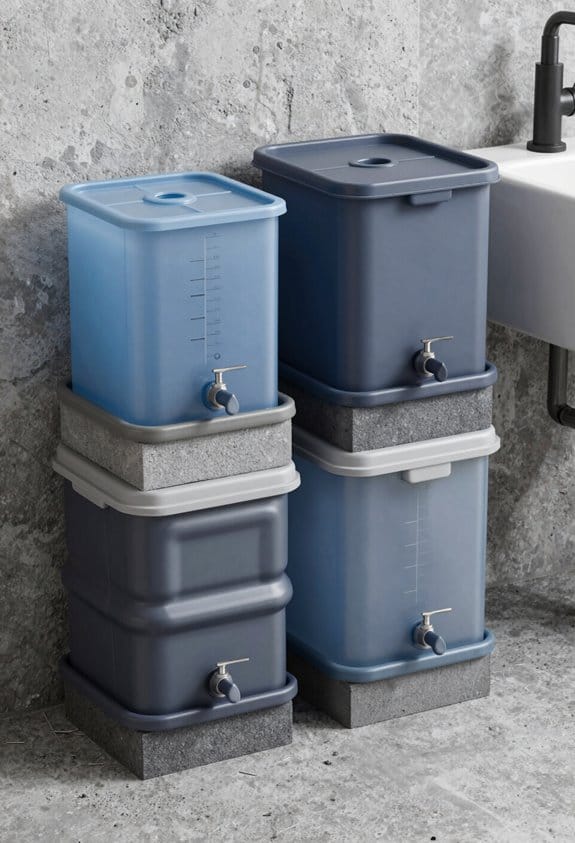
Imagine waking up one day and finding out the water supply in your apartment isn’t safe to drink. Suddenly, that emergency kit you’ve been meaning to organize seems like a genius idea. Here’s the deal: having a solid plan for water storage in small apartments isn’t just smart; it’s essential.
Why is this so important? Each person, including our furry friends, needs at least one gallon a day for two weeks. For a family of four, that adds up to a whopping 28 gallons! If you live in areas prone to earthquakes, like the Pacific Northwest, this water storage becomes even more vital, as the water infrastructure might not hold up during a crisis.
So how do you tackle this? Here are a few steps to consider:
- Choose the Right Containers: Compact, food-grade containers are key for keeping water clean and safe. Look for options that can fit in those awkward nooks and crannies around your apartment.
- Stay Organized: Mark containers with the date you filled them to keep track of when to swap them out.
- Regular Maintenance: Every 6 to 12 months, check your water supply. Take a moment to swap out the old water for fresh. This ensures you’ve always got a reliable source when you need it most.
- Also, coordinating your water storage with emergency food rations ensures you have balanced nutrition and hydration covered in any disaster scenario.
How to Choose the Best Containers for Small-Space Water Storage

Living in a small apartment can present some unexpected challenges, especially when it comes to water storage. You need to make every inch count, right? So, let me share some tried-and-true tips for picking the perfect containers to keep your water supply organized and accessible.
First off, look for reusable, food-grade plastic bottles. These are your best friends in preventing leaks and keeping that agua safe for sipping. Two-liter soda bottles work like a charm. They’re built for liquids and stack surprisingly well in tight spaces.
Consider containers that can collapse or nest when empty. This small detail makes a big difference in maximizing your limited room. Also, having several smaller bottles is a clever strategy. Instead of one bulky container, scatter them throughout your apartment. That way, you’ll always have easy access, no matter where you are.
Don’t forget to check your containers regularly. Look for any signs of wear and tear, and replace them as needed. Trust me, this will help keep your water fresh and tasty.
Planning ahead is key. With the right containers and a little organization, you’ll ensure a reliable water supply, even in small living spaces. It’s all about making smart choices. So get to it, and enjoy the peace of mind that comes with being prepared!
Choosing containers made from BPA-free, food-grade materials enhances safety and water quality in your storage plan.
Sanitize and Prepare Water Containers
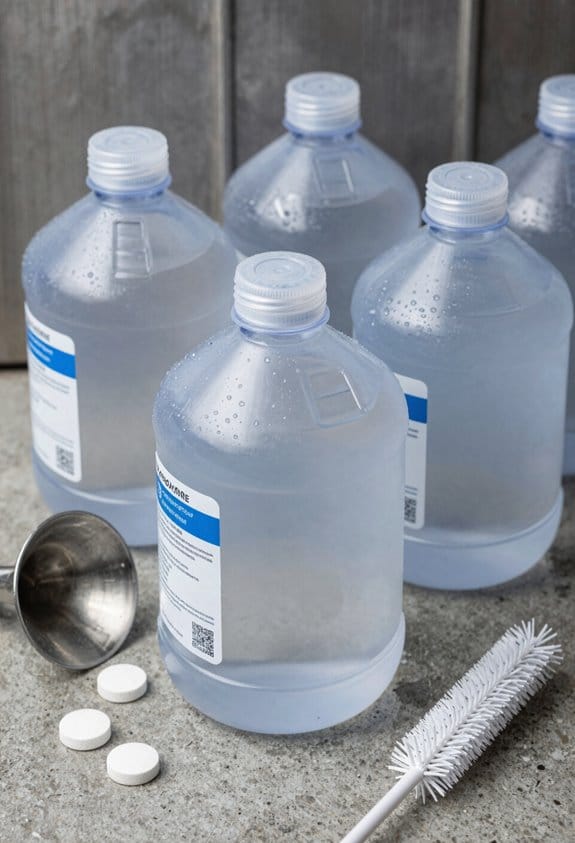
Cleaning your water containers doesn’t have to feel like a chore. A quick scrub and some simple supplies can make all the difference. Start by giving your containers and their lids a thorough wash with dish soap and warm water. Scrub them down well, making sure you get rid of any dirt or residue. Rinse them out nicely to leave no soap behind.
Now, let’s talk sanitation. You might wonder how to effectively kill off any lingering germs. The answer lies in a simple bleach solution. Mix 1 teaspoon of unscented bleach with 1 quart of water. Pour this mixture into your clean container and give it a good shake. We want to cover every inch inside. Let it sit for a few minutes (this is key), and then pour it out. Allow your containers to air dry completely before you consider using them.
When choosing your containers, always go for food-grade options, like BPA-free plastic or glass. These choices are essential to keep your water safe and clean from contamination. Additionally, selecting containers with leak-proof mechanisms helps prevent spills and contamination during storage. Once you’ve sanitized and let them dry, tightly seal your containers and store them in a cool, dark place. This helps maintain the quality of your water.
To wrap it up, properly cleaned and sanitized water containers are crucial for safe storage. With just a little effort, you can ensure your water stays fresh and ready to use. So get to it, and cheers to clean drinking water!
Fill Water Containers Efficiently in Small Spaces
Filling water containers in small spaces can really be a challenge. I’ve been there, trying to maneuver around furniture and not spill a drop. After you’ve cleaned and prepped your containers, let’s talk about how to fill them efficiently without making a mess.
First up, grab a funnel or some food-grade tubing. This simple tool really speeds up the process and keeps spills at bay. You’ll thank yourself later for this small investment! I prefer two-liter soda bottles because they fit perfectly in tight spots and hold a nice amount without hogging space.
When it comes to storing your water, think strategically. Distributing these bottles evenly around your apartment is key. You might tuck them away in closets, under beds, or any little corner that’s often overlooked. That way, they’re handy when you need them, but your living space stays clutter-free.
Another neat trick? Fill your water heater! It’s surprising how much water you can store there without needing extra floor or shelf space. Just be sure to stash your containers in cool, dark spots to keep the water fresh. And a little heads-up: plan on rotating your stash every 6-12 months. Smaller containers are easier to swap out regularly. Also, using water containers made from durable materials like high-density PVC helps ensure your stored water stays safe and your containers last longer.
Space-Saving Tips for Emergency Water Storage
Living in a small apartment can feel cramped, especially when you think about emergency preparedness. But here’s a little secret: you can store emergency water without sacrificing your space. It’s all about using the right containers and clever organizing tricks.
Consider using clean, food-grade containers like 2-liter soda bottles. They are perfect for maximizing space and won’t overcrowd your shelves. Here’s how I manage my water storage:
- Under-bed storage bins: These are like little hidden treasures. Slide in some water-filled containers, and they stay out of sight but easily accessible.
- Closets: Those often-forgotten corners can hold a stash of water. Just make sure you label each container with the storage date. This way, you’ll know when it’s time to refresh your supply.
Keep in mind, water needs to be replaced every 6 to 12 months for the best quality. Don’t forget to keep a few smaller containers right where you can grab them in a hurry. Think about emergencies that require quick action, and be ready!
Integrating your emergency water plan into your existing food storage can really work wonders. You’ll feel more prepared without overwhelming your living space. The key is to be smart about it. So, start storing today and give yourself peace of mind for whatever might come your way! Using potable aqua tablets along with stored water ensures safe drinking water in an emergency.
Use Collapsible Bottles for Emergency Water Storage
Living in a small space often means finding creative solutions for everyday needs, especially when it comes to emergency preparedness. Collapsible bottles have become my go-to for water storage. The Vapur Foldable Water Bottle, for example, holds about one liter and collapses flat when it’s empty. It’s a great fit for tight corners in my apartment.
Why go for collapsible bottles? Here are a few reasons:
- Space-saving: They fold down and fit into bags, drawers, or even pockets.
- Eco-friendly: These BPA-free bottles are reusable, making them a sustainable choice.
- Lightweight: If you ever need to evacuate, having lightweight options can be a lifesaver.
Plus, keeping water fresh is crucial. Make it a habit to check your bottles regularly and refill them as needed. This simple practice ensures you have clean drinking water on hand without cluttering your space. For added safety, consider pairing your storage with water purification drops to eliminate harmful pathogens before drinking.
Incorporating collapsible bottles into your emergency plan is smart and practical. It offers a balance of convenience and safety. So why not take that small step today? You never know when you might need it!
Organize Emergency Water Supplies With Stackable Containers
Living in a small apartment can sometimes feel like a juggling act. You want to be prepared for emergencies, but where do you even put all that water? Let me share a few insights from my own experience with emergency water storage that can help you out.
Stackable containers are your best friend. They make the most of your vertical space, which is crucial when every square foot counts. I highly recommend going for food-grade plastic containers with tight seals. This keeps your water safe from contamination and spills, so you won’t have to worry when you grab a container later.
As for sizes, I’d say stick with 1-gallon or 5-gallon options. They’re perfect for stacking, and you’ll be able to fit them into closets or even under your bed. Here’s how to stay organized:
- Choose durable, stackable containers.
- Store them in convenient spots.
- Keep an eye on them—inspect and rotate your supply every 6 to 12 months to ensure freshness.
Additionally, selecting containers with leak-proof designs will safeguard your supplies from unexpected spills and contamination.
Strategically Place Water Storage for Quick Access
Emergencies can strike at any moment, and you don’t want to be scrambling for water when time is of the essence. I’ve learned that having water storage in just the right spots makes all the difference. Here are some tips based on my own experiences.
- Small Containers: Start with small, sanitized water containers. They fit easily under sinks or in closets without taking up too much room. Keeping them handy is also a big win.
- Spread Out: Don’t put all your water in one place. Scatter containers throughout various rooms. This way, you won’t have to lug heavy loads around when every second counts.
- Use Vertical Space: Got shelves? Use them! Stack those water containers neatly to open up floor space. Vertical storage can keep your living area organized while ensuring quick access.
- Keep It Near Exits: Place some containers close to exits. If you need to leave in a hurry, you can grab water without a second thought.
- Common Areas Matter: Put water in places you often go, like the kitchen or bathroom. This guarantees that your emergency supply is ready when you need it, without cluttering your everyday life.
Using BPA-free containers is essential to ensure your water supply remains safe and free from harmful chemicals.
All of this thoughtful placement helps keep you prepared. The next time a crisis hits, you’ll be glad to have easy access to water. Staying ahead of the game is what it’s all about!
Rotate Your Emergency Water Supply Regularly
Storing water for emergencies is crucial, but do you know how to keep it fresh? It’s easy to overlook this part. Just piling up containers isn’t enough; you need to stay on top of their quality. Here’s how I keep my emergency water supply ready to go.
- Rotate your water regularly: Aim to change out your supply every 6 to 12 months. Even if it looks good, don’t let it sit. Fresh water tastes better and, more importantly, is safer.
- Inspect your containers: Check for any signs of wear or contamination. A tiny crack or dirt can spoil the whole batch.
- Mind the dates: Always look at bottled water for the manufacturer’s best-by date. Don’t risk it!
- Use safe methods for large containers: When you need to access water from big barrels, grab food-grade tubing or a siphon. This keeps everything clean and safe.
- Prioritize older supplies: Use the oldest water first to ensure you’re not stuck with anything expired.
Regular water quality checks and appropriate treatment help maintain potability over time and ensure your stored water remains safe.
Staying proactive about your emergency water keeps it safe and reliable when you need it most. Keeping up with this routine can be a lifesaver. So go ahead, check your stash, and make sure you’re ready for anything!
Make Emergency Water Storage Work for Daily Hydration
Living in a small apartment has its perks, but it also means dealing with limited space. One challenge that comes up is how to store enough water for hydration, especially during emergencies. I’ve found that with a little planning, making emergency water storage a part of your daily routine is totally doable.
You need to focus on using compact, food-grade containers. Two-liter soda bottles work like a charm for storing tap water. They’re easy to find, and as long as they’re sanitized and sealed tightly, they’ll do the job perfectly. Aim for at least one gallon per person per day. That’s about 14 gallons for two weeks. Stash these bottles under beds or in closets. Not only does this save space, but it also keeps your water easily accessible.
Regular maintenance is important, too. Check your containers every six to twelve months and swap them out as needed. This way, you’re ensuring the water remains fresh and ready for consumption.
If you need a larger capacity without cluttering your living area, think about water heaters or bigger containers. Garages or basements can hold additional supplies without getting in the way of daily life. Plus, these larger containers can help supplement your daily hydration needs efficiently.
Choosing BPA-free materials for your water containers can help ensure safety and prevent chemical leaching, especially important when storing water long term.
Staying prepared doesn’t have to be a hassle. With these simple tips, you can turn emergency water storage into a seamless part of your daily hydration habits. So get started today and make sure you’ve got everything you need ready for whatever life throws your way!
Frequently Asked Questions
How to Store Water in a Small Apartment?
We can maximize our water storage by using space-smart storage solutions like sanitized bottles and food-grade containers, combined with water filtration methods to guarantee safe drinking water, especially when space in our small apartment is limited.
How to Increase Storage Space in a Small Apartment?
We can increase storage space by maximizing verticality with tall shelves and wall-mounted units. Choosing multi-functional furniture like storage ottomans or beds with drawers helps us keep things organized without sacrificing valuable floor space.
What Are Creative Storage Ideas for Small Apartments?
We understand you might worry about clutter, but using innovative shelving and multifunctional furniture lets us store more without sacrificing style. Let’s transform small spaces by combining functionality with clever design, making room for everything we need.
Where to Store Water Bottles in an Apartment?
We’d suggest placing water bottles in closets or under beds, using vertical shelves for water bottle organization. These space saving techniques help keep them tidy and accessible without crowding your apartment’s limited floor area.


