As an Amazon Associate, we earn from qualifying purchases. Some links on this site are affiliate links at no extra cost to you. Our recommendations are based on thorough research and editorial judgment.


Water Planning for Pets in the City: Storage and Daily Use

City living does wonders for our furry friends, but it also brings unique challenges—like keeping them hydrated. Every pet deserves fresh water daily, and the rule of thumb is to provide at least one ounce of water for every pound they weigh. That means if your dog weighs 10 pounds, they need at least 10 ounces of water each day.
You may be interested


Let’s talk storage. You should always have a three-day supply on hand. Use food-grade containers that are clearly labeled to avoid confusion. Keep these containers in a cool, dark place. This ensures the water remains fresh and safe, especially during any emergencies.
For daily use, I’m a big fan of collapsible, non-slip bowls. They’re lightweight and easy to carry, perfect for outings or quick trips to the park. Also, make sure to invest in BPA-free, spill-proof bottles. They keep the water safe and prevent messes around your home.
And here’s a little tip: always have your pet’s favorite bowl on standby. Familiar objects can work wonders in reducing stress when there’s chaos—trust me.
Planning ahead ensures your pet stays hydrated and prepared for emergencies. Being organized with your water storage and emergency supplies is a game plan worth having.
Staying ahead of hydration needs makes life easier for both you and your pet. So, stock up, stay ready, and keep those tails wagging!
Key Takeaways
- Provide one ounce of water per pound of pet weight daily to meet hydration needs in urban environments.
- Store at least three days’ worth of water in food-grade, labeled containers kept in a cool, dark place.
- Use portable, collapsible water bowls and spill-proof, BPA-free bottles for convenient daily and on-the-go hydration.
- Keep water bowls clean and refilled to encourage pets to drink, especially during hot or stressful city conditions.
- Prepare an emergency water kit with enough water for seven days plus extra for pet hygiene and wound care.
Daily Water Needs for Pets in the City
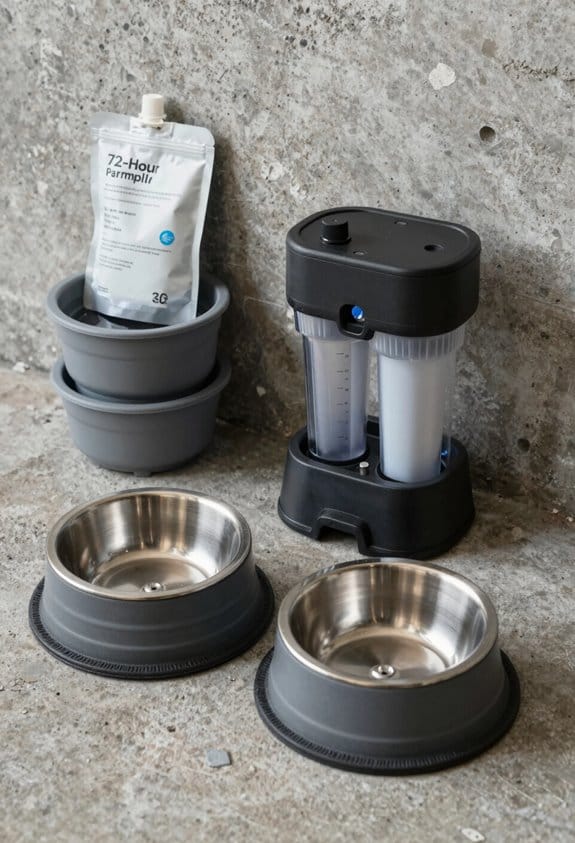
Every pet has unique water needs, and trust me, getting it right is crucial for their health. Did you know that a good rule of thumb is to provide about one ounce of water for every pound your pet weighs? For instance, a 60-pound dog needs at least half a gallon of water daily. That’s a lot of slurping!
Smaller pets, like cats and little dogs, don’t need as much, but they thrive on fresh water too. Keep their bowls filled and clean. Let’s be real: stale water doesn’t cut it. On sizzling hot days or during stressful moments, your pet’s thirst can skyrocket. So keep an eye on their hydration levels.
Here are some practical tips for keeping your pets hydrated:
- Always provide fresh water
- If you’re unsure about your tap water’s quality, opt for bottled water
- Use portable water bowls when out and about
- Have pre-filled containers ready, especially for emergencies, to meet their needs
Consider using water purification drops with EPA and FDA certifications to ensure your pet’s drinking water is safe and free from harmful bacteria.
How to Store Water Safely for Your Pet
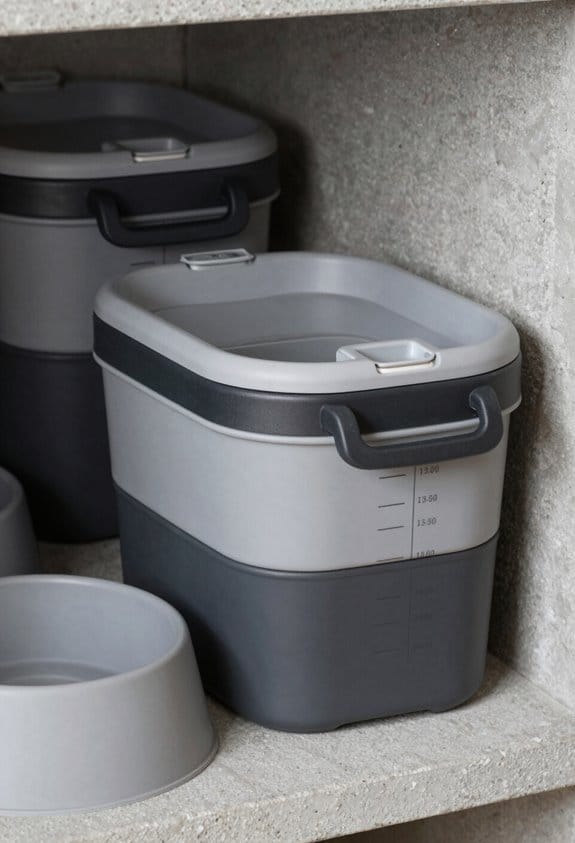
Storing water for your pet might seem like a small detail, but it’s super important. Imagine a sudden storm or a supply issue in your neighborhood. That’s when you need to be prepared. Trust me, planning ahead can save you and your furry friend from a lot of stress.
Here’s how to get it right:
- Use food-grade containers. They keep the water safe and free from harmful chemicals.
- Label each container with the fill date. This way, you’ll know how fresh the water is.
- Aim for at least one gallon per medium-sized pet, per day. Always good to think ahead.
- Keep a minimum of three days’ worth of water stored, just in case of emergencies.
- Find a cool, dark spot to store your water. Heat and light can affect quality.
- Rotate your water regularly. This prevents contamination and keeps it fresh.
- Make sure it’s easy to access. When your pet needs water, you shouldn’t be digging through stuff to find it.
- Choosing containers made from BPA-free HDPE plastic ensures safe, long-lasting water storage.
Picking Portable Water Bowls & Bottles for City Pets
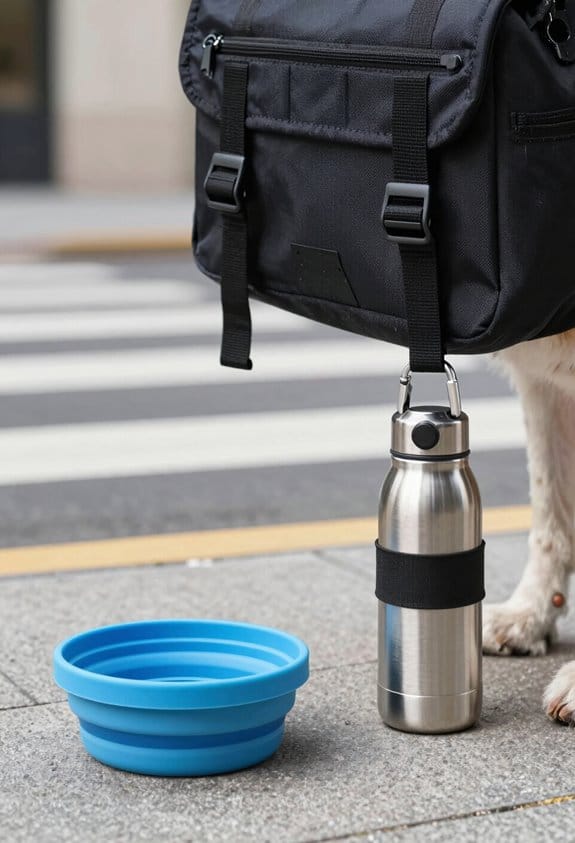
Staying hydrated is crucial for our furry friends, especially when we’re navigating the busy city streets. A reliable water source at home is just the start. When you’re out and about, having the right portable water bowl can make a world of difference.
Here’s some advice from my own experiences. Look for collapsible bowls. They’re lightweight and save space in your bag, which is essential when you’re juggling bags and leashes. You definitely want bowls with a non-slip base—trust me, they keep the mess to a minimum on those uneven sidewalks.
For water bottles, it’s all about spill-proof design and BPA-free materials. You might wonder why BPA-free matters. Simply put, it’s safer for your pets. Bottles that come with built-in bowls are fantastic. They let your pet drink directly without spilling water everywhere, which saves both clean-up time and water.
Cleaning is a breeze with the right gear. Search for options that are dishwasher-safe. This ensures you keep your pet’s water supplies squeaky clean and free from bacteria.
In short, choosing the right portable water bowls and bottles isn’t just a convenience—it’s a must for city pet owners. Keep your pets happy and hydrated while enjoying your urban adventures together! When selecting your gear, also consider durable materials to withstand the rigors of daily city life and frequent cleaning.
Keeping Pets Hydrated During Emergencies
Emergencies can catch us off guard, leaving both us and our pets feeling anxious. One of the first things to ensure is that our furry friends stay hydrated. Trust me, planning ahead makes a world of difference. Here’s how I tackle pet hydration during emergencies.
First off, store a minimum of three days’ worth of clean drinking water. Use sealed containers that are easy to spot. Label them clearly so you don’t waste time searching when you’re stressed. You should know that your pet needs about one ounce of water for every pound they weigh. So, if you have a 50-pound dog, that means 50 ounces of water per day. Calculate your pet’s needs carefully before storing.
Surprisingly, stress can make pets drink more water than usual. That’s why having their familiar water bowls accessible is key. Never let your pets sip from puddles or streams, though. That water can be contaminated and dangerous.
When prepping your emergency kit, don’t forget collapsible water bowls. They’re lightweight and perfect for taking with you if you ever need to evacuate. It’s all about keeping things easy and manageable.
Regularly check on your water supply. Make sure it’s fresh and ready to go. Keeping your pet hydrated is essential, so you want to avoid any surprises.
Reliable water containers designed with leak-proof mechanisms can help ensure your stored water stays clean and safe through emergencies.
Ultimately, it’s all about being ready. With a little planning, you can ensure your pets stay hydrated no matter what comes your way. Keep those tails wagging!
Must-Have Water Supplies for Your Pet’s Emergency Kit
When disaster strikes, having a solid plan for your furry friend is crucial. Water is life, and I’ll tell you why it needs to be at the top of your emergency kit list. A good rule of thumb is to have enough clean water for at least seven days, especially if you’re evacuating or stuck at home.
So, how much should you pack? Aim for one ounce of water per pound of your pet’s body weight each day. For a 20-pound dog, that’s about 20 ounces! Plus, don’t forget to include portable, collapsible water bowls. These are super handy when you need to keep your pet hydrated on the go.
Here’s a tip: always pack a little extra water. It’s useful not just for drinking but for washing wounds or cleaning up muddy paws, which helps prevent infections. And consider throwing in some pet-safe purification tablets. They’re a must-have if your water supply runs low.
Keep everything organized in your emergency kit. Having it all in one place ensures you’re ready for anything. Don’t overlook hydration; animals get thirsty—especially when stressed. Using their familiar water bowls can help them feel more at ease and encourage them to drink.
In short, an efficient water supply in your pet emergency kit will help keep your pal safe and hydrated when it matters most. Don’t wait—prep now to keep your furry friend happy! Choosing BPA-free water containers ensures the water stays safe and maintains its quality during storage.
Frequently Asked Questions
How Much Water to Store for Pets?
We recommend storing at least three days’ worth of water per pet, factoring in daily intake and heat considerations. Using best containers guarantees water freshness, supporting pet hydration and health, essential for emergency supplies, travel tips, and urban living.
How to Treat Water for Long-Term Storage?
Remember when our old fish tank turned green? That’s algae—something we avoid by choosing the right water storage containers and using best purification techniques, water filtration methods, keeping water cool, and testing quality, extending shelf life for emergencies with DIY solutions.
How Long Can Water Be Stored Before It Goes Bad?
It is understood that water quality depends on proper containers, temperature control, and filtration methods. Typically, water expires within 6-12 months, but signs of spoilage like odor or discoloration indicate bacterial growth. Purification tablets help maintain pet hydration.
What to Stockpile for 72 Hours?
For 72 hours, let’s stockpile emergency supplies like clean water in travel containers, portable bowls, water purification tablets, ice packs, and sanitation needs to guarantee pet hydration, water quality, and pet safety during disaster preparedness.


